
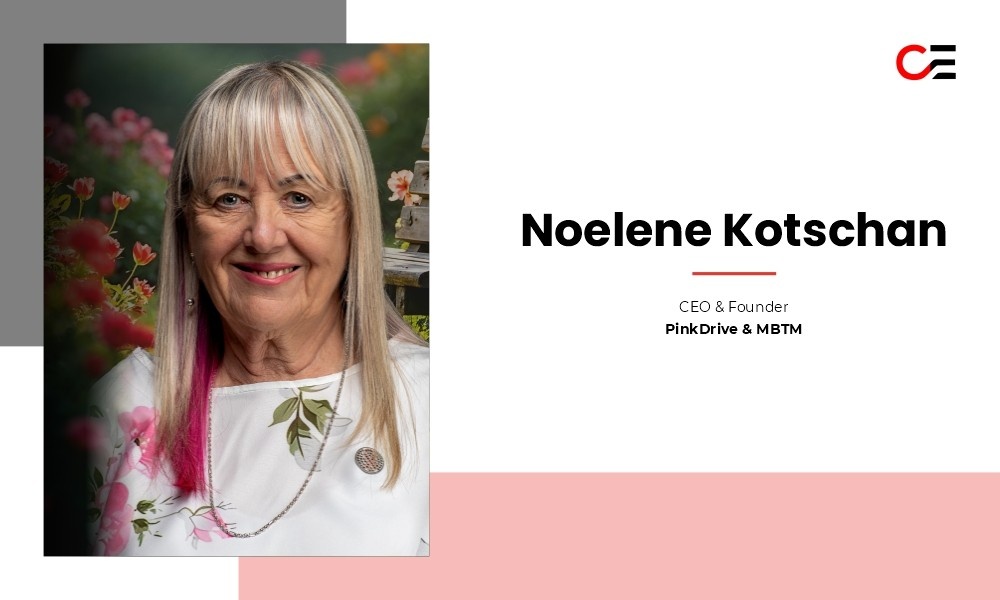
For many leaders, the journey into impact begins with intent. For Noelene Kotschan, it began with exposure to a reality that could not be ignored.
Her professional foundation was built in the corporate sector, where she developed a strong grounding in marketing, communications, and strategic brand development. Working across established organisations, she gained experience in stakeholder engagement, campaign strategy, and operational execution. It was an environment defined by structure, measurable outcomes, and clearly mapped growth trajectories. Success was predictable, and execution was precise.
Over time, however, that clarity began to feel insufficient.
As Noelene gained deeper exposure to the realities of healthcare access, particularly within underserved communities, a stark contrast emerged. Preventative healthcare services, especially those related to breast and cervical cancer, were not reaching those who needed them most. The gap was not in the availability of solutions. Screening technologies exist. Awareness campaigns were active. Yet access remained uneven and, in many cases, entirely absent.
In several communities, early detection services were simply out of reach.
This realization marked a turning point. It reshaped her perspective, not only as a professional but as someone positioned to address a systemic challenge. What became clear was that the issue extended beyond healthcare. At its core, it was about access.
If access was the problem, then the solution required a fundamentally different approach.
This thinking led to the founding of PinkDrive NPC.
From Corporate Precision to Purpose-Led Leadership
Noelene’s transition from the corporate sector into social impact was not impulsive. It was a deliberate shift driven by the need to create tangible and measurable change.
Rather than leaving behind her corporate discipline, she applied it with greater intent. Operating within a resource-constrained healthcare environment demands structure, accountability, and strategic clarity. In this space, inefficiency carries direct consequences.
Her leadership style is structured, purpose-driven, and grounded in accountability. Every initiative, partnership, and operational decision is aligned with a singular objective: improving access to preventative healthcare.
She remains closely involved in strategy, partnerships, and advocacy while building teams that are capable, accountable, and aligned with the mission. The organisation is designed to function as a system, not as an individual effort.
Her communication style is direct, transparent, and values based. Whether engaging with government bodies, corporate stakeholders, or communities, the message remains consistent. Improving access to early detection requires alignment across all levels.
Redefining Healthcare Delivery Through Mobility
At the core of PinkDrive NPC’s model is a principle rooted in practicality. If individuals cannot access healthcare services, those services must be brought to them.
This led to the development of a mobile, community-first healthcare model designed to address infrastructure gaps, geographic barriers, and socioeconomic constraints.
Today, PinkDrive NPC delivers a comprehensive range of services:
• Breast cancer screening through mobile mammography and clinical examinations
• Cervical cancer screening, including Pap smears, supported by HPV awareness and education
• Prostate cancer screening through PSA testing
• Education on testicular cancer and broader preventative health
• Community-based awareness programmes
• Patient navigation and referral support to ensure continuity of care
Through More Balls Than Most (MBTM), the organisation extends its reach into men’s health, addressing prostate and testicular cancer awareness and early detection, areas that are often underrepresented in preventative healthcare.
What differentiates this model is not only its mobility, but its integrated approach. Screening is combined with education to drive informed decision-making and long-term behavioural change, particularly in relation to HPV awareness and cervical cancer prevention.
With an increasing focus on cervical cancer elimination through HPV awareness, screening, and education, the organisation continues to strengthen its contribution to preventative healthcare at scale.
Navigating the Realities of Scale
Scaling a purpose-driven healthcare organisation presents both structural and operational challenges.
The demand for early detection services continues to rise, particularly in underserved communities. At the same time, funding within the non-profit healthcare sector remains constrained and, at times, unpredictable. This creates a complex operating environment where prioritisation is critical.
Key challenges include:
• Expanding access without compromising the quality of care
• Managing limited financial resources while ensuring sustainability
• Directing maximum resources toward patient care
• Balancing visibility with meaningful, outcome-driven impact
Under Noelene’s leadership, these challenges are addressed through resilience, discipline, and a clear sense of purpose. The organisation has built strong, value-aligned partnerships, remained financially disciplined, and prioritised collaboration over competition.
A guiding principle shapes this approach. The purpose must lead to a strategy. When decisions are anchored in impact, sustainability becomes the outcome of consistent and disciplined execution.
Technology as an Enabler
As PinkDrive NPC continues to expand, technology plays an important role in strengthening operations and improving reach.
Digital systems are used to monitor screening outcomes, track patient referrals, and support continuity of care. They also enable the organisation to extend awareness campaigns beyond physical outreach initiatives.
However, technology is not positioned as a replacement for human engagement.
In healthcare, particularly in women’s health, trust remains essential. It is built through direct, respectful, and community-based interaction.
Technology enhances efficiency, but it is human engagement that builds trust and drives participation.
A Sector Moving Toward Prevention
The broader healthcare landscape is undergoing a shift toward preventative care.
A growing global priority is the elimination of cervical cancer as a public health challenge. This is being driven by expanded HPV vaccination, increased access to early screening, and improved pathways to treatment.
Several key trends are shaping the future of the sector:
• Increased emphasis on data-driven impact and accountability
• Stronger collaboration between public and private sectors
• Integration of preventative services into primary healthcare systems
• Expansion of mobile and decentralised healthcare delivery models
Within this evolving environment, organisations like PinkDrive NPC play a critical role in bridging the gap between policy ambition and on-the-ground implementation, ensuring that strategy translates into measurable impact at community level.
Beyond Strategy, Toward Sustained Impact
For Noelene, sustainability is not defined by short-term success. It is built through consistency, engagement, and long-term commitment.
PinkDrive NPC’s approach focuses on sustained community engagement, continuous education around HPV and cancer prevention, and consistent availability of screening services rather than one-off interventions.
The organisation also works closely with public health systems to ensure continuity of care beyond initial screenings.
Financial sustainability is supported through diversified funding partnerships aligned with measurable health outcomes, ensuring that impact remains in the central focus.
Recognition and Measurable Milestones
PinkDrive NPC has been recognised for its contribution to mobile healthcare delivery, cancer awareness, and community-based screening innovation in South Africa.
Key recognitions include the 2025 Social Impact Influencer of the Year (NGO) South Africa Award, received in Qatar, and the 2026 Fluxx Award for Global Excellence in Social Impact and Cancer Awareness, received in Manila. The organisation has also been nominated for a Corporate Social Investment Award and a Global Excellence and Leadership Award in Cape Town.
Beyond formal recognition, some of the most meaningful milestones include:
• Expansion of mobile screening services into rural and underserved communities across South Africa
• Increased uptake of cervical cancer screening through community-based interventions
• Strengthened HPV awareness and education as part of broader preventative health efforts
• Early detection outcomes enabling timely treatment and improved patient prognosis
These milestones reflect measurable impact and sustained progress at community level.
The Challenge That Remains
Despite progress, the central challenge persists.
Knowledge exists. The tools are available. The frameworks are in place.
Yet access remains inconsistent, particularly in underserved regions.
Addressing this requires a sustained and focused approach:
• Expanding education around cancer prevention and HPV awareness
• Scaling mobile healthcare delivery models
• Strengthening integration between outreach initiatives and public health systems
• Elevating preventative healthcare as a national priority
Cervical cancer represents a critical opportunity. It is largely preventable. The challenge lies not in capability, but in accessibility.
A Mission That Continues
As PinkDrive NPC looks ahead, its direction remains clear.
While continuing efforts across breast, prostate, and testicular cancer, the organisation is placing increasing emphasis on cervical cancer elimination. This includes expanding HPV education, increasing screening coverage, and strengthening referral pathways.
There is also a long-term vision to extend this model beyond South Africa into other parts of Africa where similar disparities in access exist.
The focus is not on expansion for recognition. It is on expansion for reach and impact.
The Principle at the Core
At the centre of Noelene’s work is a belief that continues to guide every decision.
Early detection prolongs lives.
It is a principle grounded in both responsibility and action. In the case of cervical cancer, prevention is not theoretical. It is achievable through awareness, vaccination, and regular screening.
The question is no longer whether solutions exist.
The question is whether those solutions will be made accessible to everyone.
Because access should not determine who receives timely care. Until it no longer does, the work remains unfinished.