
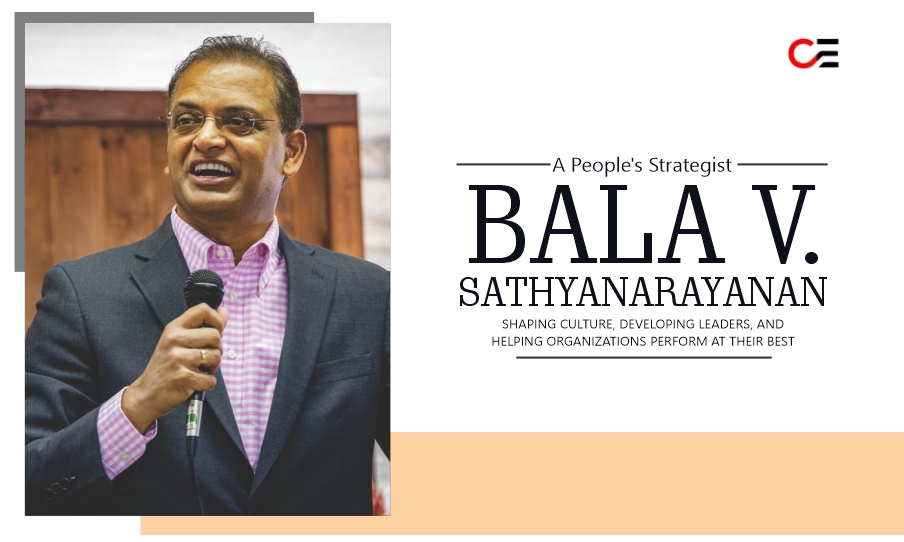
Leadership journeys that encompass an everyday impact become iconic. In that sense, Bala V. Sathyanarayanan’s professional journey reflects the breadth of experience that comes from leading human resources across complex, global organizations. Having served in senior HR roles at companies such as Xerox, Hewlett-Packard, Avaya, Coca-Cola, United Technologies/Otis, and now Greif., he has built a career at the intersection of business transformation, talent strategy, and organizational culture. His path into HR leadership is defined by a strong belief that people ultimately drive business success. His leadership philosophy suggests that HR is most impactful when it moves beyond administration and becomes a strategic function that shapes culture, develops leaders, strengthens engagement, and helps organizations perform at their best.
Bala’s view of a successful CHRO is grounded in both strategic capability and human insight. He believes that today’s CHRO must be able to connect talent decisions directly to business priorities while also serving as a steward of culture, trust, and colleague experience. In an evolving business landscape, that means leading with agility, empathy, authenticity, and resilience. His perspective is that strong HR leadership requires more than policy or process expertise — it requires judgment to navigate change, the credibility to influence business decisions, and humanity to lead people through uncertainty in a way that builds confidence and commitment.
Bala sees HR leadership in the Middle East as a strategic lever for transformation in a region marked by growth, modernization, and rising expectations around talent. His perspective is that HR leaders must play a central role in helping organizations adapt by building strong cultures, developing local and global talent, and aligning workforce strategies to long-term business priorities. Rather than treating HR as a support function, he positions it as a catalyst for organizational capability, helping companies navigate change while creating an environment where colleagues feel engaged, valued, and prepared for the future.
A Rooted Approach
Bala’s approach to culture and engagement is rooted in intentional leadership and authentic human connection. He believes that a strong culture is built through trust, openness, consistency, and a clear sense of purpose. His leadership philosophy emphasizes empathy, communication, and the importance of making colleagues feel seen, supported, and connected to the broader mission of the organization. From that perspective, engagement is not created through programs alone, but through everyday leadership behaviors that reinforce belonging, encourage growth, and create the conditions for people to contribute at a high level.
A Connected Leadership Perspective
Bala’s leadership perspective is that business performance and colleague well-being are not competing priorities but deeply connected ones. He approaches this balance by aligning workforce development and talent strategy with the needs of the business while also recognizing that sustainable performance depends on people feeling supported, valued, and equipped to grow. His philosophy reflects the idea that when leaders invest in well-being, learning, and development, they are also investing in resilience, capability, and long-term business success. In that sense, workforce development becomes both a people priority and a business imperative.
The Tech-Enablers of Human Resources
Bala views technology and AI as important enablers of a more strategic, responsive, and data-informed HR function. From this perspective, technology can improve decision-making, streamline processes, and create more personalized and efficient colleague experiences. At the same time, his broader leadership philosophy is that the future of HR cannot be driven by technology alone. Human judgment, empathy, ethics, and culture remain essential. In that balance, AI becomes a tool to enhance HR leadership — not replace the deeply human responsibility of understanding people, building trust, and shaping the colleague experience.
Countering High-Stakes Challenges
Bala’s HR leadership journey has been defined by the kinds of high-stakes challenges that come with leading people’s strategy across global, matrixed, and constantly evolving organizations. Given the breadth of Bala’s experience, those challenges have included navigating business transformation, supporting organizations through disruption, aligning talent strategy with shifting commercial priorities, and sustaining colleague engagement across diverse geographies, cultures, and leadership environments. These are not simple HR execution issues — they are enterprise leadership challenges that require both strategic rigor and strong human judgment.
The Distinctive Link
What distinguishes Bala’s approach is the way he connects professional expertise with leadership philosophy. Rather than treating challenges as isolated operational issues, he approaches them as moments that test an organization’s culture, leadership maturity, and long-term resilience. His perspective is that the most effective way to overcome complexity is through a combination of business alignment, clear communication, empathy, and credibility with both leadership teams and colleagues. In practice, that likely means helping organizations make difficult decisions while preserving trust, maintaining transparency, and ensuring people remain connected to purpose during periods of change.
His leadership philosophy is also that he views adversity as an opportunity to lead more humanely, not less. He has emphasized qualities such as vulnerability, authenticity, and empathy — traits that are especially important when organizations are under pressure. That indicates a leadership style rooted not only in competence, but in presence: being visible, approachable, and intentional in how he guides people through uncertainty. This kind of leadership is especially critical in HR, where success often depends on the ability to balance organizational performance with colleague confidence, well-being, and development.
From an executive standpoint, Bala’s experience appears to reflect an important truth about modern HR leadership: the biggest challenges are rarely solved through policy alone. They are overcome by combining strategic insight with emotional intelligence, by leading through change with consistency and care, and by building cultures strong enough to withstand pressure while continuing to grow. His journey suggests that enduring HR leadership is not just about solving problems — it is about helping organizations emerge from challenges stronger, more aligned, and more connected than before, rather than stand-alone HR activities. Given his experience leading human resources across large, global organizations, his perspective suggests that attracting and retaining talent in a highly competitive market requires much more than filling roles quickly. It requires building an environment where people see opportunity, feel valued, and believe they can grow, contribute, and succeed over the long term. His approach seems rooted in the understanding that the strength of an organization’s talent ultimately shapes its ability to execute strategy, drive innovation, and sustain performance.
A Crucial Focus
From a professional expertise standpoint, Bala’s focus is on aligning talent strategy closely with business needs. In a competitive market, that means understanding where critical capabilities are needed, identifying the skills and leadership profiles that will support future growth, and ensuring the organization is positioned to compete for top talent with a compelling colleague value proposition. His leadership background is an appreciation for the fact that retention begins well before a person joins the company. It starts with culture, reputation, leadership credibility, and the overall colleague experience an organization offers from recruitment through development and advancement.
The Central Philosophy
What is also central to Bala’s philosophy is that retention is not driven by compensation alone. His broader leadership themes point to a belief in the power of culture, communication, empathy, and purpose. That suggests he sees long-term retention as the result of colleagues feeling connected to meaningful work, to supportive leaders, to development opportunities, and to an organization that genuinely invests in their success. In that sense, talent retention becomes less about keeping people in place and more about creating the conditions in which they want to stay and thrive.
His leadership philosophy also implies a human-centered approach to talent acquisition. In a highly competitive market, organizations cannot rely only on process efficiency; they must also create trust and authenticity in how they engage candidates and colleagues. Bala values leadership behaviors that make people feel respected, heard, and supported. That approach likely strengthens both attraction and retention by reinforcing a workplace culture that is not only high-performing, but also deeply people-focused.
From an executive perspective, Bala’s approach is that winning in the talent market requires integrating workforce planning, culture, leadership, and colleague development into a single strategy. The organizations most likely to attract and retain strong talent are those that clearly connect business ambition with human opportunity. His experience-driven perspective reflects the idea that talent is not simply a resource to acquire, but it is a long-term investment to develop, engage, and lead with intention.
Envisioning a Powerful Intersection
Bala sees the future of HR and leadership in 2026 and beyond as being shaped by a powerful intersection of business transformation, technological acceleration, and evolving colleague expectations. Given the depth of his experience across global organizations, his perspective reflects the view that HR is no longer simply responsible for supporting the business — it is increasingly expected to help shape the business. In that environment, the future of HR will be defined by how effectively leaders can align talent, culture, capability, and organizational resilience with long-term strategic priorities.
One of the most significant trends Bala points to is the growing role of technology and AI in transforming how HR operates and delivers value. From talent acquisition and workforce planning to colleague experience and decision-making, technology is enabling HR to become more data-informed, predictive, and efficient. But based on the leadership philosophy he has consistently reflected, he would likely emphasize that technology alone is not the future of HR — thoughtful leadership is. AI can strengthen insights and improve processes, but it cannot replace empathy, judgment, trust, or the human connection required to lead people well. In that sense, he sees the future of HR as increasingly digital, but still deeply human at its core.
He identifies leadership capability itself as a defining trend. In a business environment shaped by uncertainty, constant change, and rising expectations, organizations need leaders who can do more than execute strategy. They need leaders who can build trust, create clarity, inspire confidence, and lead with authenticity through ambiguity. Bala’s leadership is that the most effective leaders of the future will be those who combine resilience and strategic thinking with vulnerability, empathy, and strong communication. As organizations continue to evolve, leadership will be measured not only by business outcomes but also by the ability to create cultures where people can adapt, contribute, and thrive.
Another major trend Bala sees is the continued elevation of colleague experience, workforce development, and organizational culture as business-critical priorities. In a more competitive and rapidly changing talent landscape, companies cannot rely solely on compensation or brand reputation to attract and retain strong talent. They must create environments where colleagues feel connected to purpose, supported in growth, and confident in leadership. His experience is an understanding that engagement, development, and culture are not soft priorities — they are strategic drivers of performance, retention, and long-term success. The organizations that will lead in the future are those that invest intentionally in people while building cultures that are resilient, inclusive, and high performing.
Bala frames the future of HR and leadership as a shift toward greater integration between business strategy and human strategy. The HR leaders who create the most value will be those who can navigate digital transformation, strengthen leadership capability, and build adaptable organizations without losing sight of human experience. His philosophy is that the future belongs to leaders who can balance innovation with empathy, performance with well-being, and enterprise growth with genuine investment in people. In that way, the future of HR is not simply about new systems or evolving structures — it is about leading organizations with both strategic intelligence and human depth.
Redefining Success
Bala’s view of success includes how well HR aligns talent strategy with the evolving needs of the business. That means ensuring the organization has leadership capability, workforce readiness, and cultural resilience needed to meet current goals and prepare for future demands. He sees success in outcomes such as stronger colleague engagement, improved leadership effectiveness, higher retention of key talent, deeper organizational capability, and a workforce that is both agile and connected to the company’s purpose. His background suggests that he would not separate people’s outcomes from business outcomes; rather, he would see them as deeply interconnected measures of organizational success.
Central to Bala’s philosophy is the human dimension of leadership. He consistently emphasizes themes such as empathy, authenticity, vulnerability, and connection, which measure success not only by metrics, but by trust. HR leadership is successful when colleagues believe in the organization, feel supported through change, experience meaningful growth, and see leadership acting with credibility and care. Culture, in that sense, becomes a key indicator of success — not as an abstract concept, but as something visible in how people lead, collaborate, communicate, and respond under pressure.
Bala defines HR success as the ability to build an organization that is both high-performing and deeply human. The most effective HR leadership does not just solve workforce issues as they arise; it helps create the conditions for sustained performance, stronger leadership, and a culture where people and business can grow together. His philosophy is that the real measure of success is whether HR leaves the organization stronger, more resilient, more aligned, and better equipped for the future.
Bala would advise aspiring HR professionals and future CHROs to build their careers with both strategic depth and human understanding. His guidance would begin with the idea that HR is at its best when it is deeply connected to the business. He encourages future HR leaders to move beyond seeing HR as a functional specialty alone and instead develop a broad understanding of how organizations operate, grow, compete, and transform. His credibility in HR leadership comes not only from people expertise, but from the ability to connect talent, culture, and leadership decisions directly to business outcomes.
Bala’s career across multiple global organizations is such that he would encourage emerging HR leaders to seek breadth as well as depth. That means gaining exposure to different industries, business models, leadership teams, and cultural environments to build judgment and adaptability. He stresses the importance of learning how to navigate complexity, lead through change, and influence across functions and geographies. Future CHROs need to understand not only people’s processes, but also transformation, workforce planning, organizational capability, leadership development, and the realities of operating in fast-changing environments.
A Human Advice
At the same time, Bala’s leadership philosophy is that he would tell aspiring HR leaders never to lose sight of the human side of the role. He has consistently emphasized empathy, vulnerability, authenticity, and connection — qualities that point to a view of leadership grounded in trust and presence. That suggests he would encourage future leaders to listen deeply, communicate clearly, and lead with integrity, especially during difficult moments. In HR, technical expertise may open doors, but it is credibility, emotional intelligence, and the ability to build trust that ultimately define leadership impact.
He advises aspiring CHROs to see culture not as a secondary concern, but as one of the most powerful levers of organizational success. His experience is understanding that strong cultures do not happen by accident — they are built intentionally through leadership behavior, clear values, accountability, and everyday colleague experience. Future HR leaders must be willing to shape culture actively, challenge outdated practices, and help organizations create environments where people can grow and perform at their best.
Most importantly, Bala advises future HR leaders to remain learners. In a world shaped by rapid technological change, shifting workforce expectations, and increasing pressure on organizations to be agile and resilient, the best HR leaders will be those who continue evolving. He encourages them to stay curious, embrace change, and use technology and data wisely — but without losing the judgment and humanity that make leadership effective. His philosophy is that the future CHRO is not simply an expert in HR, but a trusted enterprise leader who combines business acumen, cultural stewardship, and genuine care for people.
A Meaningful Legacy
Bala hopes to create a legacy defined by strong HR leadership alone — one rooted in having helped build organizations where people feel valued, supported, and inspired to do their best work. Given his experience across global companies, his legacy will be measured by the cultures he helped shape, the leaders he helped develop, and the lasting connection he created between business success and human-centered leadership.
His legacy will be tied to the belief that leadership is most meaningful when it strengthens both organizational performance and the lives of the people within it. He emphasizes empathy, authenticity, vulnerability, and culture that he wants to be remembered as a leader who brought humanity into executive leadership — someone who helped organizations grow not only by driving results, but by building trust, developing talent, and creating environments where people could thrive.
The legacy Bala hopes to leave is one of lasting impact: stronger cultures, stronger leaders, and organizations that succeed because they invested deeply and intentionally in their people.