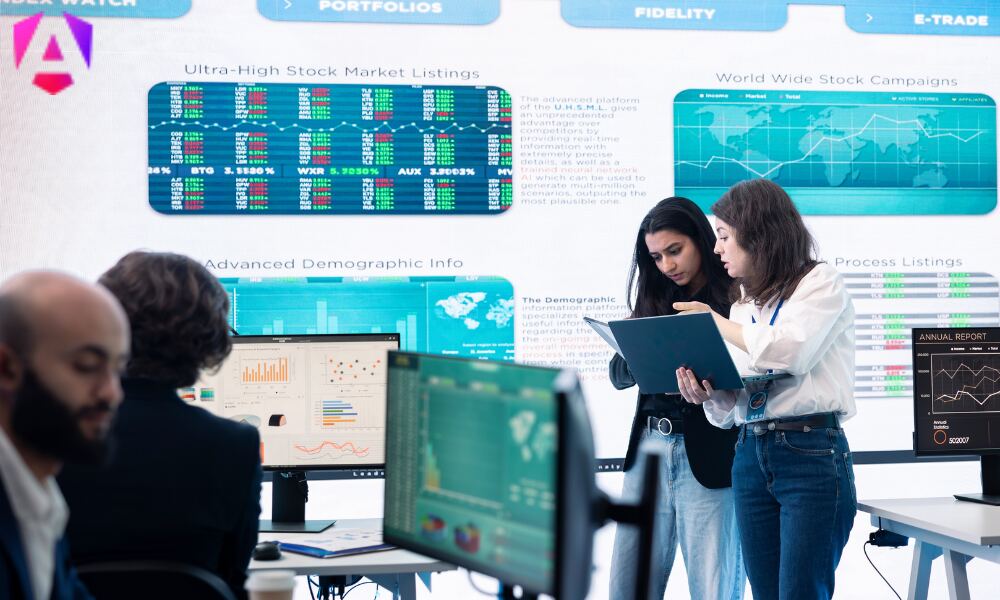
With the introduction of agentic AI, artificial intelligence trade surveillance is undergoing a significant change in the rapidly changing financial technology scene. Prominent international institutions, such as Deutsche Bank and Goldman Sachs, are currently developing these sophisticated algorithms to better monitor trading activity and proactively identify possible wrongdoing. With this action, traditional rule-based monitoring will give way to a new era in which autonomous AI technologies facilitate compliance innovation, improving trade oversight’s speed and accuracy.
This article examines the operation of agentic AI, how it is revolutionizing artificial intelligence trade surveillance, and why it is a significant advancement above conventional AI systems.
How Does Agentic AI Operate and What Is It?
Agentic AI demonstrates autonomy; it plans activities toward predetermined goals and makes decisions without direct human guidance, in contrast to traditional models that merely analyze data and produce alerts. Practically speaking, these systems are able to:
- Analyze streaming data in real time from various sources
- Recognize questionable trends as they develop
- Launch inquiries or intensify warnings, and Instead of using predetermined thresholds, modify replies according on the context.
This feature is a crucial distinction between classical and agentic artificial intelligence. Conventional systems rely on static criteria, such as predetermined triggers like high trading volume or benchmark deviations. Agentic tools, on the other hand, are able to identify anomalies that strict rule-based systems could overlook since they can reason about trends over time and contexts.
A key component of artificial intelligence in trade surveillance is the transition from reactive pattern identification to proactive decision-making, which is currently being tried by significant financial institutions.
Why AI That Does More Than Just React Is Necessary for Trade Surveillance
Every day, markets produce billions of transactions in a variety of asset classes and international venues. This volume is frequently too much for human compliance teams and older technology, which results in alert backlogs and high false positive rates. Sophisticated wrongdoing may go unnoticed until after the fact because to the limits of traditional AI-driven surveillance, such as delayed response and strict logic.
The strength of agentic AI is its capacity for observation, decision-making, and action, which makes it perfect for real-time risk assessment. Instead of sending out ordinary noise, these algorithms can simultaneously analyze historical context, systemic cues, and behavioral patterns to send out alarms that need significant human assessment.
For instance, Deutsche Bank is working with cloud technology partners to test agentic AI models that can quickly sort through thousands of trade records. In a similar vein, Goldman Sachs is now using AI for surveillance and compliance tasks in addition to trading activities.
Application of Agentic AI in Financial Compliance
Installing smarter software is only one aspect of using agentic systems in trade surveillance; another is integrating agentic AI across data platforms, risk tools, and compliance dashboards. Important actions consist of:
- Combining information from many sources orders, execution records, conversations
- Educating agents about past trends and legal requirements,
- Setting up action policies to elevate context-based alerts,
- putting in place human oversight and auditing skills to ensure responsibility.
As a result, a surveillance ecosystem is created that supports compliance teams rather than taking their place, enhances decision quality, and changes in tandem with market behavior.
AI’s Broader Impact: Not Just in Finance
Although financial surveillance is the main topic of this narrative, agentic AI has much wider ramifications. The potential for autonomous AI systems to transform operations is being investigated by a variety of industries, including logistics and agriculture.
One real-world example of how AI is changing agriculture is its ability to autonomously handle crop monitoring, irrigation scheduling, and pest identification.
AI is revolutionizing logistics by enabling intelligent agents to route deliveries, streamline warehouse operations, and instantly adjust to interruptions.
These applications demonstrate that agentic AI is evolving from a specialized tool to a platform for autonomous decision-making in a variety of industries.
Surveillance’s New Frontline
The future looks like systems that do more than just analyze—they act—as Goldman Sachs, Deutsche Bank, and others invest in artificial intelligence for trade monitoring. Proactive detection and ongoing learning replace static rules and alarms in surveillance thanks to agentic AI. In addition to improving compliance results, this development provides a model for how AI may handle intricate tasks with little assistance from humans.
Agentic AI is the next frontier in artificial intelligence trade surveillance, a step toward really intelligent systems that think, act, and adapt in a world of fast-moving markets and complex regulatory regimes.