
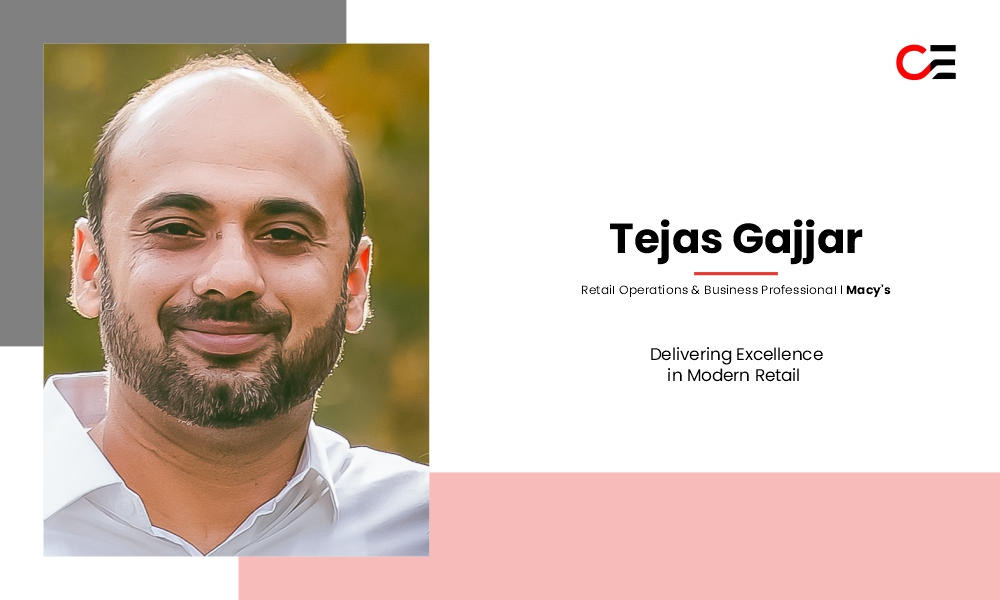
A 15-Year Journey Through Engineering, Architecture, and Leadership, Building Scalable Systems, Empowering Teams, and Shaping the Future of Enterprise Technology
With more than fifteen years of experience in technology, this leader’s career reflects a journey through engineering, architecture, and strategic leadership. Beginning in the field of middleware and systems integration where the focus lies in enabling complex systems to communicate seamlessly, the early years were dedicated to ensuring reliability, scalability, and performance across interconnected technologies. Over time, this technical foundation evolved into a broader realization: effective technology leadership is not only about solving technical challenges but also about connecting people, recognizing patterns within complexity, and transforming intricate systems into clear, efficient solutions.
At Macy’s, a globally recognized retail organization, they lead teams responsible for designing and supporting the backbone of the company’s enterprise technology ecosystem. The most rewarding aspect of this work lies in seeing how technology innovations directly enhance customer experiences, optimize system performance, and strengthen collaboration across teams. For them, innovation is meaningful when it translates into tangible business value.
Leading Enterprise Platform Transformation
As Head of Unified Middleware and Cloud Platform Engineering, they oversee the critical infrastructure that connects applications, data flows, and cloud systems across Macy’s digital and in-store environments. Their responsibilities span cloud migrations, middleware modernization, and large-scale operational automation.
Strategic alignment plays a vital role in this position. By ensuring that Macy’s technology transformation aligns with long-term business objectives, they help drive sustainable innovation while maintaining operational stability across the organization’s complex IT landscape.
Driving Impact Through Cloud Strategy
One of the defining milestones in their career was leading the development of a unified cloud strategy that bridges traditional on-premises systems with modern cloud platforms such as Oracle Cloud Infrastructure and Google Cloud. This initiative significantly streamlined enterprise operations, improving efficiency by more than 60 percent, and delivering over $60 million in cost savings.
Beyond infrastructure transformation, their team has also focused on building intelligent monitoring capabilities. AI-driven observability tools were implemented to identify anomalies before they disrupt operations, enabling proactive incident management. On the cybersecurity front, a zero-trust security architecture powered by AI-based threat detection and continuous monitoring has strengthened the organization’s security posture. The overarching objective has been clear: shift from reactive troubleshooting to proactive, data-driven intelligence.
Engineering Innovation at Scale
Among their most notable achievements is the development of the Proxy Queue Messaging framework, an internal innovation designed to improve communication across distributed systems. The framework enhanced system performance by nearly 40 percent while generating annual cost savings of approximately $25 million. Its scalability and simplicity also earned external recognition within the technology community.
Another major milestone was implementing Exadata Fleet Management automation, which eliminated downtime during critical business cycles as an essential improvement for an enterprise operating at a massive scale.
They also architected a fault-tolerant multicast overlay network designed for cloud-native environments. This architecture bridges on-premises infrastructure with multi-cloud platforms, enabling resilient communication across distributed systems. The research was later published on IEEE TechRxiv, contributing valuable insights to the broader technology community.
These initiatives reinforce a core philosophy: when technology is optimized for engineers, it ultimately becomes more effective for the business.
Building a Culture of Innovation
For this technology leader, innovation flourishes through curiosity rather than pressure. Creating an environment where engineers feel comfortable asking questions, experimenting, and challenging conventional approaches is essential.
Their teams regularly conduct innovation sprints, which often evolve into full-scale implementations that drive measurable value. Continuous learning is also deeply embedded in the culture through certifications, mentorship programs, and cross-functional collaboration. Equally important is recognition of celebrating incremental achievements that collectively fuel long-term progress.
Navigating the Complexity of Enterprise IT
Modern IT service management is defined by scale and complexity. Managing enterprise platforms requires precision, reliability, and a zero-tolerance approach to guesswork. Yet these challenges also create opportunities for innovation.
Balancing security, performance, and speed remains one of the greatest challenges in enterprise technology. However, advancements in automation and artificial intelligence are creating new pathways to address these competing priorities effectively.
Leadership Through Vision and Execution
Balancing strategic vision with operational execution is central to their leadership philosophy. A compelling long-term vision must be supported by measurable milestones and practical implementation.
This leader divides their focus between long-range strategy and day-to-day execution, ensuring that teams not only understand the destination but also have the tools and autonomy to reach it. Empowering teams to make decisions fosters agility, accountability, and a shared sense of ownership.
Championing Mentorship and Inclusion
Mentorship plays a vital role in their professional journey. They actively support initiatives such as Women in Technology (WIT), mentoring professionals and advocating for inclusive leadership. Being recognized as a WIT Ally stands among their most meaningful honors.
For them, diversity is not simply a moral imperative; it is a strategic advantage. Diverse perspectives lead to stronger systems, more innovative solutions, and better organizational outcomes. At Macy’s, they prioritize inclusivity, equal opportunity, and collaborative growth.
The Future of Cloud and Intelligent Systems
Looking ahead, they believe the next generation of cloud computing will be defined by intelligence and autonomy. Emerging technologies such as Agentic AI will allow platforms to self-heal, self-secure, and self-scale, dramatically improving resilience and operational efficiency.
Cybersecurity will increasingly shift toward predictive defense powered by continuous AI monitoring. At the same time, advancements in edge computing and quantum-safe security will reshape enterprise infrastructure over the coming decade, blurring traditional boundaries between cloud operations and security management.
Advice for Aspiring Technology Leaders
Their advice to the next generation of technology leaders is simple yet powerful: focus on creating value rather than chasing trends.
Solving real problems, staying adaptable, and building strong relationships remain the foundations of impactful leadership. Technologies evolve rapidly, but principles such as trust, empathy, and clear communication endure.
“Leadership,” they emphasize, “is ultimately about people, not platforms.”
Recognition and Industry Contributions
Their contributions to technology and leadership have earned several prestigious recognitions. They have been named a Fellow of the British Computer Society (BCS) and a Senior Member of IEEE, acknowledging both technical excellence and professional impact.
They have also served as a judge for events such as IEEE SoutheastCon and Georgia Tech’s Capstone Expo, mentoring and evaluating emerging innovators who will shape the future of technology.
Despite numerous accolades, being recognized as a Women in Technology Ally remains the most personally meaningful achievement, reflecting a deep commitment to mentorship and inclusive leadership.
Staying Ahead in a Rapidly Evolving Industry
Remaining current in the technology landscape requires continuous learning and collaboration. They regularly engage with global engineering communities through organizations such as IEEE, BCS, and IET, contributing to discussions on artificial intelligence, middleware, and enterprise automation.
Publishing research papers and whitepapers, as well as collaborating with engineers worldwide, helps them stay both informed and inspired. Curiosity and knowledge sharing remain key drivers of professional growth.
Looking Toward the Future
At Macy’s, several forward-looking initiatives are currently underway. These include expanding the organization’s hybrid cloud ecosystem across Oracle Cloud Infrastructure, Google Cloud Platform, and on-premises environments; enhancing observability through AI-powered predictive monitoring; and advancing sustainability through energy-efficient infrastructure strategies.
Each of these initiatives reflects a broader mission: building a resilient, intelligent, and customer-centric technology ecosystem capable of supporting the future of retail.
A Guiding Philosophy
Their guiding philosophy captures the essence of their leadership approach:
“Technology is only as powerful as the human progress it enables.”
Every decision from designing systems to mentoring colleagues is guided by this belief. Technology should simplify complexity, empower organizations, and ultimately create meaningful progress for people and businesses alike.