
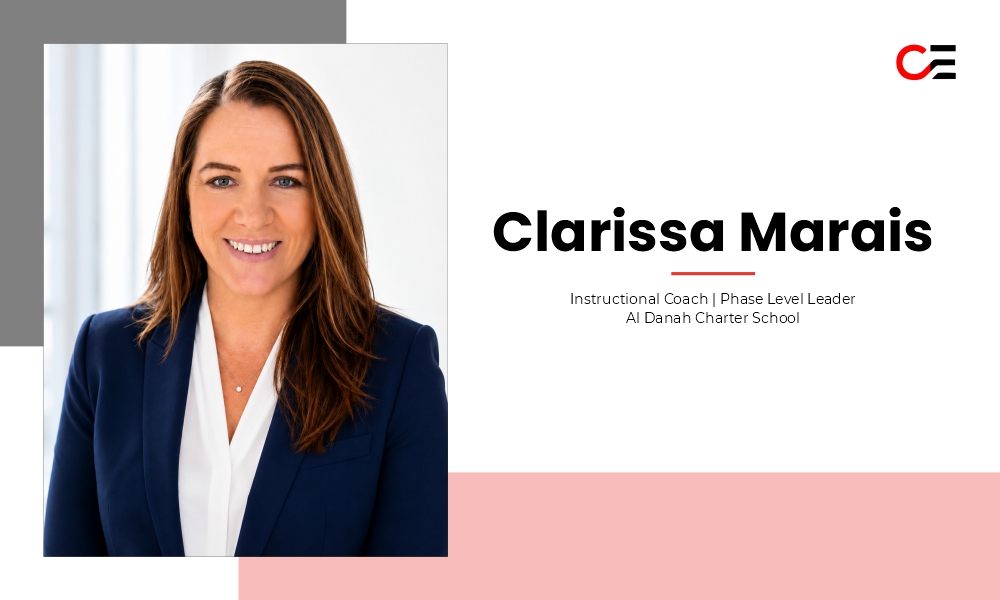
For many education leaders, the journey begins with a passion for teaching. For her, however, that passion gradually evolved into a broader commitment to strengthening entire learning communities. While working as a classroom teacher, she recognised that meaningful and lasting impact extends beyond helping individual students—it comes from equipping educators with the support, tools, and confidence they need to create high-quality learning experiences for every child.
This belief became the foundation of her professional journey. As her experience grew, so did her interest in understanding the factors that genuinely influence student achievement. Pursuing advanced studies in Curriculum, Instruction, and Assessment allowed her to deepen her expertise in curriculum design, evidence-informed teaching practices, assessment, and instructional coaching. More importantly, it reinforced her conviction that effective education is built on purposeful teaching, meaningful relationships, and a culture where continuous improvement is embraced at every level.
Working across diverse educational settings has further shaped her perspective on instructional leadership. Rather than viewing schools simply as places of learning, she sees them as collaborative environments where educators learn alongside one another, reflect on their practice, and continuously refine the way they support students. Her transition into leadership enabled her to work closely with teachers, analyse learning trends, develop school improvement strategies, and implement systems that strengthen both teaching quality and student outcomes. The greatest inspiration, she explains, continues to come from witnessing growth—whether it is a learner gaining confidence, an educator discovering an approach that transforms classroom practice, or a team realising what can be achieved through collaboration.
Milestones That Shaped Her Leadership
Over the years, several milestones have defined her professional journey. Completing her Master’s degree in Curriculum, Instruction, and Assessment significantly expanded her understanding of the relationship between curriculum, pedagogy, assessment, and student success. Equally meaningful has been the opportunity to serve in instructional leadership positions, including as an Instructional Coach and Phase Level Leader. These roles have allowed her to lead professional learning, mentor teachers, support curriculum implementation, analyse assessment data, and contribute to broader school improvement initiatives.
Her work has also extended into curriculum mapping, assessment moderation, instructional frameworks, digital transformation, artificial intelligence integration, and data systems that help teachers make informed instructional decisions. Yet, despite these achievements, she measures success less by projects completed and more by the positive changes they create. Seeing teachers become more confident, students achieve stronger outcomes, and schools cultivate cultures of continuous improvement remains the most rewarding measure of progress.
Empowering Teachers Through Instructional Leadership
Today, her responsibilities centre on strengthening teaching quality through collaboration, coaching, and strategic leadership. She supports educators through instructional coaching cycles, learning walks, professional learning, curriculum development, and the analysis of student performance data while helping maintain consistency in teaching and assessment practices. As a Phase Level Leader, she also works closely with teaching teams to translate whole-school priorities into practical classroom strategies, ensuring consistency across year groups while building teachers’ capacity to lead improvement within their own practice.
Among all aspects of her role, working directly with teachers is the most fulfilling. She believes educators have the greatest influence on student success, making investment in their professional growth one of the most effective ways to improve learning outcomes. Watching teachers refine their practice, embrace innovation, and witness positive changes within their classrooms continues to reinforce why instructional leadership matters.
Turning Data into Better Learning Outcomes
A significant element of her leadership philosophy is the thoughtful use of data to guide educational decisions. Rather than treating data as a collection of numbers, she views it as a tool for understanding individual learners and improving their educational experiences. Assessment results, classroom evidence, formative assessments, and international benchmarking all provide valuable insights that enable teachers to adapt instruction, identify students requiring additional support or greater challenge, and evaluate the effectiveness of teaching strategies.
Equally important, she believes collaborative data analysis strengthens professional dialogue and shared accountability among educators. When teams reflect on evidence together, they are better positioned to celebrate progress, identify areas for improvement, and make informed decisions that ultimately benefit every learner.
Leading Meaningful and Sustainable Change
Like many education leaders, she acknowledges that leading sustainable change has been one of the greatest challenges throughout her career. Schools operate in constantly evolving environments, and implementing new initiatives requires far more careful planning. Lasting improvement depends on building trust, fostering shared understanding, and encouraging collective ownership of the process.
Through experience, she has learned that meaningful transformation begins with people rather than systems alone. Listening to educators, understanding the challenges they face, and providing practical support create the conditions necessary for change to succeed. Instead of focusing solely on compliance, she prioritises building capability, believing that when teachers understand the purpose behind change and feel supported throughout the journey, improvement becomes both meaningful and sustainable. For her, effective leadership is not about having every answer, but about creating an environment where people can discover solutions together.
Creating a Culture of Growth Through Coaching
For her, instructional leadership is most effective when it begins with trust and collaboration. She views coaching as a partnership rather than a process of directing others. Instead of telling teachers what to do, she believes in working alongside them to reflect on their practice, explore new approaches, and continuously refine their teaching. Through coaching conversations, lesson analysis, classroom modelling, targeted feedback, and collaborative professional learning, she helps educators strengthen both their confidence and instructional expertise.
She also recognises that professional growth flourishes in environments where teachers feel supported to experiment, innovate, and learn from experience. Celebrating incremental progress is just as important as recognising major achievements because sustainable excellence develops over time. Her objective is to nurture reflective practitioners who remain committed to learning throughout their careers while recognising the positive influence they have on every learner they teach.
Defining Leadership in a Changing Educational Landscape
The demands on today’s education leaders continue to evolve, requiring a balance of vision, adaptability, and empathy. In her view, effective leadership combines innovation with evidence-informed decision-making while remaining firmly centred on people. A clear direction is essential, but so is the flexibility to respond to changing educational needs and emerging challenges.
She believes emotional intelligence has become one of the most valuable leadership qualities because schools thrive through strong relationships. Leaders who empower others, encourage collaboration, and create opportunities for professional growth contribute to cultures where both teachers and students feel valued. Equally important is a commitment to lifelong learning. As technology, artificial intelligence, and workforce expectations continue to reshape education, leaders must continuously develop their own knowledge to prepare students for an increasingly unpredictable future.
Balancing Technology with Human Connection
Technology has transformed the way teaching and learning take place, offering new opportunities to personalise education and improve access to learning. She sees artificial intelligence and digital tools as valuable resources that can assist teachers in identifying learning gaps, creating differentiated learning materials, providing timely feedback, and reducing administrative demands. By streamlining routine tasks, technology allows educators to dedicate more time to meaningful interactions with students.
Despite these possibilities, she emphasises that technology should complement rather than replace effective teaching. Human relationships remain at the heart of education, and no digital innovation can substitute for the guidance, encouragement, and understanding that teachers provide. Looking ahead, she believes successful classrooms will combine technological innovation with the development of creativity, collaboration, critical thinking, and problem-solving skills that prepare students for future success.
Driving Improvement Through Practical Initiatives
Among the initiatives she considers particularly meaningful is her work to strengthen curriculum alignment, assessment quality, and data-informed teaching practices. Supporting teachers in analysing curriculum standards, improving assessment design, and using student performance data more effectively has enabled learning experiences to become increasingly focused and responsive to student needs.
Professional learning sessions, coaching cycles, and collaborative planning have helped shift the conversation from simply collecting information to using evidence strategically in everyday teaching. The outcome has been stronger in instructional practice, greater consistency across classrooms, and more targeted support for learners. For her, meaningful improvement is measured not by isolated projects but by sustainable changes that positively influence teaching and learning over time.
Building Strong Partnerships Across the School Community
A positive learning culture depends on relationships built through trust, respect, and open communication. She approaches every interaction with teachers by listening carefully, understanding their perspectives, and working collaboratively to address challenges. With students, her priority is creating learning environments where they feel supported, valued, and encouraged to achieve their full potential.
She also views parents as essential partners in the educational journey. Maintaining clear communication and establishing shared expectations strengthens the connection between home and school, ultimately benefiting student learning. When educators, families, and students work together with a common purpose, schools become communities where everyone understands their role in helping learners succeed.
Addressing the Challenges Shaping Modern Education
Education today faces the challenge of preparing students for a future that continues to evolve while meeting present-day academic expectations. She believes schools must look beyond the traditional delivery of knowledge and focus on developing adaptable learners equipped with critical thinking, collaboration, creativity, and problem-solving skills. These competencies, she explains, will enable students to navigate an increasingly dynamic world with confidence.
At the same time, she recognises the growing demands placed on educators. Teachers are expected to balance instruction, assessment, administration, and continuous professional development, making effective support systems more important than ever. Investing in meaningful professional learning, implementing efficient processes, and adopting technology that reduces rather than adds to teachers’ workload are essential steps toward creating healthier and more effective learning environments. Ultimately, she believes schools should function as learning organisations where students, teachers, and leaders grow together through continuous improvement.
Encouraging the Next Generation of Women Leaders
As a woman in educational leadership, she hopes to encourage aspiring educators to recognise the value of their perspectives and contributions. She believes leadership is defined less by position and more by the influence individuals have through their everyday actions, conversations, and decisions. Every opportunity to support others, she says, creates the potential for lasting impact.
She encourages future leaders to embrace opportunities even before they feel completely prepared, viewing growth as a process rather than a destination. Remaining curious, seeking mentors who inspire continuous learning, and building supportive professional networks have all played an important role in her own journey. Above all, she believes that effective leaders create opportunities for others to succeed, strengthening both individuals and the wider educational community.
Looking Ahead with Purpose
Looking to the future, she remains committed to expanding her contribution to educational improvement on a broader scale. Her aspiration is to support schools in strengthening teaching quality, enhancing curriculum effectiveness, and improving student achievement through sustainable, evidence-informed practices. She is particularly interested in researching the characteristics of successful schools and developing practical frameworks that enable educators to deliver lasting improvements.
She also hopes to continue contributing to educational innovation, leadership development, and instructional excellence in ways that benefit both teachers and students. By combining research, collaboration, and practical experience, she aims to support learning communities that are well equipped to respond to the changing needs of education while maintaining a clear focus on student success.
Leadership Measured by Lasting Impact
For her, meaningful leadership is not defined by titles, recognition, or professional milestones but by the positive difference made in the lives of others. Success is reflected in the confidence built within teachers, the opportunities created for students, and the collective achievements of teams working toward a shared purpose. The greatest sense of fulfilment comes from knowing that her work helps others grow, whether through a learner reaching an important milestone, a teacher gaining confidence in their practice, or a school community achieving goals that once seemed beyond reach.
This perspective continues to shape every aspect of her professional journey. Rather than focusing solely on personal accomplishments, she measures success through the progress of the people around her and the lasting impact created through collaboration, trust, and continuous learning.
A Guiding Philosophy
Throughout her career, one principle has remained constant: “Leadership is not about being the best. Leadership is about making everyone around you better.” This philosophy reflects her belief that education is ultimately a profession centred on impact. The most meaningful legacy educators leave is not measured by individual achievements, but by the people they inspire, support, and empower to reach their own potential. As education continues to evolve, this commitment to developing others remains at the heart of her leadership and the contribution she hopes to make in the years ahead.