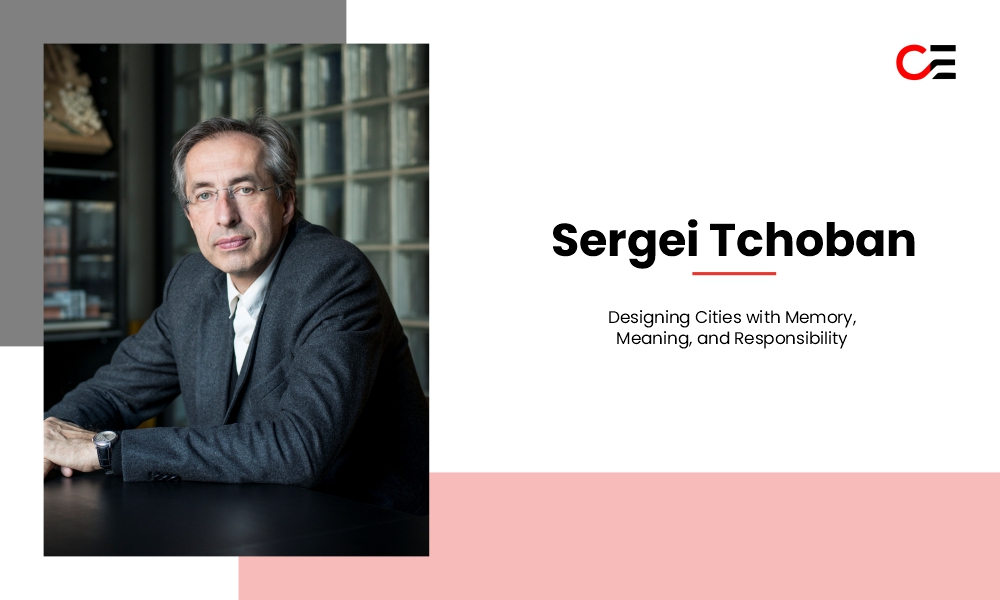
Architecture is not only about constructing buildings. It is about shaping how people experience cities, how history is carried forward, and how the built environment responds to the future. For Sergei Tchoban, this belief has guided a career that brings together artistic discipline, cultural awareness, and a deep commitment to sustainability and urban identity.
Early Inspiration Shaped by Art and Observation
Sergei Tchoban’s journey began in Saint Petersburg, where he attended a specialised art school as a child. His earliest training was as a graphic artist, and by the age of eight he had already developed a fascination with architectural drawing. The historic city around him became an open classroom. Its skyline, proportions, and intricate details sparked a curiosity that would define his professional direction.
He was particularly drawn to how buildings aged over time and how architectural elements carried visible traces of history. Encouraged by his teachers, he chose to pursue architecture formally and later studied at the Ilya Repin Academy of Arts in Saint Petersburg. Drawing architecture has remained central to his process ever since, not simply as a representational skill but as a way of thinking and discovering ideas.
A Collaborative and Hands-On Leadership Style
Today, as Managing Director of Tchoban Voss Architekten, Tchoban leads an international practice while maintaining close involvement in design development. Despite the firm’s size and multiple locations, he strives to remain personally engaged with projects.
Communication plays a critical role in this approach. Direct dialogue with colleagues allows ideas to evolve quickly and clearly. Tchoban often sketches during discussions because drawing remains the most effective form of communication for him. These conversations are open, honest, and focused on shared goals, helping to create a strong creative culture across the organisation.
Responsibilities Rooted in Quality and Trust
One of his primary responsibilities is ensuring that the practice operates efficiently while securing meaningful projects at both national and international levels. This involves working closely with associates, project partners, and project teams to develop strong conceptual foundations and innovative solutions.
Equally important is delivering excellent service throughout the entire construction process. From discussions with approving authorities to coordination with contractors and consultants, the firm emphasises clarity, reliability, and collaboration. Client satisfaction is essential because long-term partnerships are built on trust and consistent quality.
Guiding Principles That Shape the Firm’s Vision
Three key ideas guide Tchoban’s leadership and design philosophy.
First, buildings must be sustainable and constructed from high-quality, environmentally responsible materials. Architecture should age well and remain valuable over time.
Second, the adaptive reuse of existing structures is critical. Demolition often means losing cultural identity and wasting embedded energy. Preserving and transforming buildings helps maintain the architectural language of a place.
Third, architecture should enrich the social and cultural atmosphere of a city. Buildings must contribute positively to their surroundings rather than function as isolated objects.
Delivering Tailored Design with Lasting Identity
Tchoban Voss Architekten focuses on developing precise, individualised concepts and realising them with exceptional attention to detail. The firm aims for completed buildings to exceed the expectations set by their visualisations.
Maintaining this level of identity in a competitive global environment requires balancing innovation with discipline. Each project is treated as a unique response to its site while reflecting the firm’s consistent commitment to craftsmanship and clarity.
The Importance of Context in Every Project
For Tchoban, contextual relevance is fundamental. Every building must respond thoughtfully to its urban environment, its social conditions, and its historical background. Architecture should grow from its surroundings rather than impose itself upon them.
This philosophy is strongly influenced by Berlin, where he has worked extensively. He views the city as an honest representation of architectural evolution. Walking through its neighbourhoods reveals layers of transformation, each contributing to a rich and complex urban narrative.
Learning Through Challenges
Like any long professional journey, Tchoban’s career has included both successes and difficulties. He believes these experiences are essential to growth. The key lesson is to maintain passion for design and remain committed to the creative process despite obstacles.
This sustained enthusiasm continues to drive his work and inspires those around him.
Technology as Support for Human Creativity
While recognising the growing role of digital tools and artificial intelligence, Tchoban emphasises that architecture remains a human discipline. Technology can assist with analysis, modelling, and efficiency, but the central design idea and communication with society must come from people.
In his view, innovation should enhance creativity, not replace it.
Creating Long-Term Value Through Knowledge and Experience
Architecture today plays an increasingly strategic role in urban development and investment. Tchoban believes that creating long-term value requires learning from past buildings, including those from recent decades. Understanding what has endured and what has failed helps architects design structures that are truly sustainable.
These lessons inform decisions about materials, construction methods, and spatial quality, allowing contemporary projects to achieve both durability and relevance.
Preparing for Future Industry Trends
Looking ahead, Tchoban expects increasing competition from automated design processes. However, he believes that thoughtful, well-researched concepts with ecological responsibility and carefully crafted details will become even more important.
Superficial ideas will fade, while architecture grounded in strong principles will remain in demand.
Sustainability as a Comprehensive Responsibility
Sustainability is embedded in every stage of the firm’s work. Reducing carbon emissions begins with material selection and continues through energy-efficient operation. Renewable energy systems, modular construction strategies, and lifecycle thinking all contribute to responsible development.
Yet sustainability also includes aesthetic longevity. A building must remain meaningful and appreciated over time. Emotional durability is just as important as technical performance.
Supporting Creativity and Knowledge Exchange
Tchoban is deeply committed to nurturing creativity within the profession. He founded the Tchoban Foundation Museum for Architectural Drawing in Berlin to highlight the importance of drawing as a conceptual tool and cultural practice.
Within the firm, training programmes and workshops with international experts encourage teams to expand their skills and explore new ideas, ensuring continuous intellectual growth.
Addressing the Challenges Facing Modern Architecture
One of the key concerns he identifies is the increasing tendency toward purely utilitarian buildings. While efficiency is necessary, cities must not lose visual richness or craftsmanship.
Architecture should once again embrace beauty as an essential quality, creating spaces that engage people emotionally as well as functionally.
Defining Success Through Balance
Tchoban defines success as a balance between design excellence, social relevance, and commercial viability. Architecture is inherently interdisciplinary, requiring architects to act as creators, coordinators, and strategists.
Despite these varied roles, he believes the artistic dimension must remain central because it gives architecture its cultural significance.
Looking Toward the Future
As he looks ahead, Tchoban hopes his work will demonstrate how ideas developed through drawing can translate into meaningful built environments. He encourages future architects to return to sketching as a way of thinking and exploring possibilities.
Clients and partners can expect reliability, innovation, and carefully considered solutions from his team as they move toward the future. From early planning stages to final construction, the firm remains committed to delivering projects that combine ecological responsibility, contextual awareness, and precise execution.
At the heart of Sergei Tchoban’s philosophy lies a simple but powerful principle. Architecture begins with thought, and thought often begins with a drawing. Through this process, ideas take shape, cities evolve, and the built environment gains lasting meaning.