
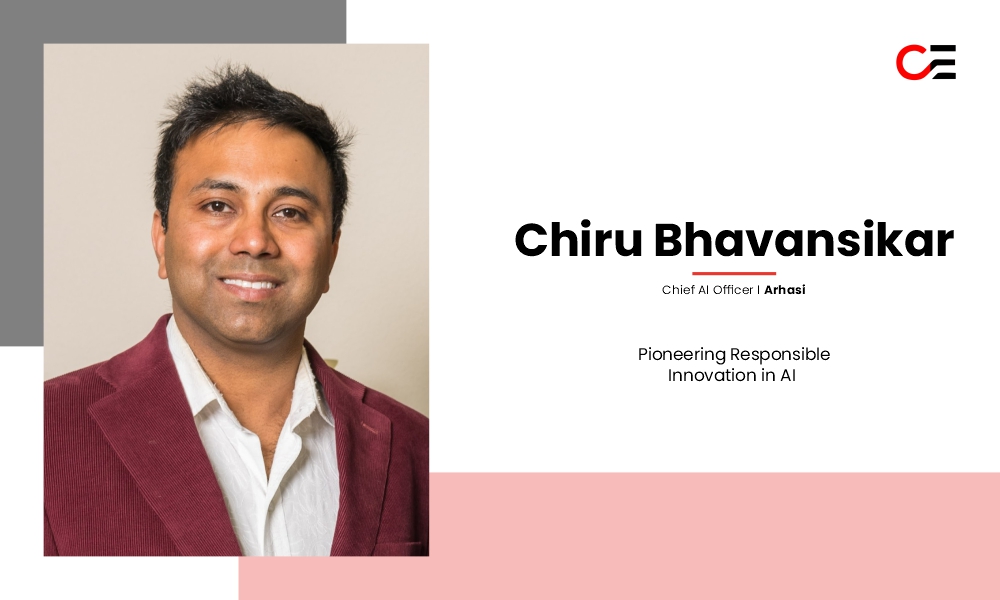
Building Ethical Intelligence: The Transformational Journey of an AI Visionary

In an age where algorithms often steer the conversation, few leaders speak with the clarity, conviction, and grounded wisdom of the Chief AI Officer at Arhasi. With a career that stretches over two decades across global landscapes; from laying the groundwork for cloud systems in Australia to building AI frameworks that genuinely serve people; his story is a testament to how ethics, vision, and leadership can come together to shape something truly lasting.

But this isn’t just another tale of a tech expert chasing the next big thing. It’s the story of a systems thinker, strategist, and steward of responsible AI who has quietly but powerfully shaped the future of intelligent automation.

From Cloud Pioneer to AI Strategist: A Journey Anchored in Values

The trajectory began in 2005, at a time when cloud computing was more theory than infrastructure. Tasked with leading Australia’s first large-scale distributed computing platform, he saw beyond servers and scalability. What he saw early on was a new kind of infrastructure, one that could empower small businesses by giving them access to computing capabilities once reserved for giants.

That hands-on experience with system design became the bedrock of a career that has never been just about keeping up with innovation, but about guiding it in a direction that serves real human needs. By the time he moved to Silicon Valley in 2011; joining forces with the likes of Dell, EMC, and Cloudera; the data revolution was already gathering speed. He, however, was already looking further ahead: toward artificial intelligence not as automation, but augmentation. A means to enhance human judgment, not replace it.

That vision deepened during his time with Deloitte and PwC, where he moved from execution to enterprise transformation. “I wasn’t just building platforms,” he reflects, “I was reshaping how institutions think.” His clients spanned finance, healthcare, and the public sector, but the guiding principle was consistent: technology must serve people—not the other way around.

Designing the Future at Arhasi: Where AI Meets Operational Intelligence

Today, as Chief AI Officer at Arhasi and strategic leader at Ops Intelligence, his remit spans far beyond code. His mission: to build intelligent automation systems that function like the digital nervous system of a modern enterprise, reflexive, modular, and context-aware.

“What excites me most,” he explains, “is how AI is evolving from isolated tools to enterprise-wide ecosystems. We’re not just optimizing workflows; we’re enabling real-time orchestration of decisions across entire organizations.”

The crown jewel of this transformation is the R.A.P.I.D. platform; an architecture for Responsible AI that weaves integrity, provisioning, and defence into the fabric of every deployment. From real-time anomaly detection in global supply chains to GenAI-enabled diagnostics in healthcare, the platform underscores a deeper belief: intelligence is only meaningful when it is ethical, explainable, and human-aligned.

At Arhasi, innovation isn’t just a goal; it’s a responsibility.

Leading with Empathy, Driving with Discipline

Despite his technical gravitas, what sets this AI leader apart is his human-first approach to leadership. He describes his style as “vision with discipline”; a philosophy that balances ambition with execution, experimentation with accountability.

“My goal is to create environments where bold ideas can flourish, but within the guardrails of ethical clarity and commercial relevance,” he says. That vision has taken shape through cross-functional “innovation pods,” where designers, engineers, HR, legal, and compliance professionals co-create solutions from day one.

It’s also embedded in the organization’s culture of “fail fast, learn loud”; a model that treats setbacks not as failures, but as data points. Objectives and Key Results (OKRs) tie innovation directly to business value, ensuring that creativity and accountability evolve hand-in-hand.

Empathy, he adds, is not a soft skill. It’s a strategic one. “When people feel heard, they take ownership. When teams trust each other, they move faster, smarter, and with greater purpose.”

Defining Moments: From IMF to Intelligent Infrastructure

Among his many milestones, a few moments remain especially meaningful.

Launching Australia’s first elastic infrastructure platform was a foundational achievement, but it was his leadership in organizing “Big Data Day” at the International Monetary Fund that signalled his ability to influence at a global scale. Bringing data science into the heart of economic forecasting wasn’t just timely; it was transformative.

Later, his leadership in AI-led healthcare programs focused on eliminating algorithmic bias in underserved regions. These projects weren’t just about deploying AI; they were about equity, access, and social responsibility.

At Arhasi, that ethos took shape in the R.A.P.I.D. platform and the company’s shift toward platform intelligence, modular AI ecosystems that enable real-time decision-making across entire industries. From AI control towers in manufacturing to portfolio optimization in finance, these platforms are operationalizing intelligence at scale.

Navigating Complexity: Consulting as a Crucible

The transition into management consulting in 2017 was a crucible moment. For someone who had led large-scale engineering efforts, entering the world of enterprise advisory meant shedding the illusion of control and embracing influence.

“There was resistance,” he admits. “Many clients still saw AI as buzz, not business value. Projects stalled. Scepticism ran high.”

Rather than retreat, he retooled introducing investment models tied to ROI, embedding users in the design process, and forming cross-functional innovation teams. One breakthrough came when his team built a financial forecasting platform that shifted decision cycles from days to minutes; by integrating AI outputs with real business incentives.

“It was proof,” he says, “that AI adoption hinges on clarity, not complexity; on empathy as much as engineering.”

The Road Ahead: Platform Thinking and Ethical Agility

Looking to the next five years, he sees hyper automation and platform intelligence as the defining trends. “The winners won’t be those with the most AI tools,” he notes, “but those who build the most ethical, intelligent, and resilient systems.”

But he’s also pragmatic. “The greatest challenge isn’t technical—it’s cultural readiness.” Many enterprises still lack the frameworks, talent strategies, and governance models needed to move from pilots to platforms.

That’s why the R.A.P.I.D. framework remains core to Arhasi’s vision guardrails for AI systems that are explainable, secure, and future-proof. It’s a philosophy that keeps innovation in check without slowing it down.

Building Human-Cantered Innovation Cultures

At the heart of his leadership is a commitment to continuous learning. He mentors globally; empowering engineers in South America to become AI strategists; and builds teams that thrive on intellectual curiosity and mutual respect.

Innovation, he says, isn’t a department. It’s a discipline. “Every project is a learning lab. Every person, a multiplier.”

From internal upskilling to design thinking workshops and AI ethics roundtables, his teams are challenged to think beyond the algorithm to design for the real world, not just the model.

And crucially, diversity and inclusion are not afterthoughts they’re structural principles. “Homogeneity leads to blind spots. Diverse teams don’t just build better AI they build more human systems.”

Grounded Leadership in a Turbulent World

How does one stay cantered while leading AI innovation at such scale?

For him, well-being starts with purpose. “Clarity of intent reduces noise,” he says. His practices include yoga, immersive travel, and deep spiritual reflection tools that help him recalibrate when complexity peaks.

He blocks time for deep work. Prioritizes mentorship. Delegates with trust. And perhaps most powerfully embraces the Bhagavad Gita’s wisdom:

He often quotes a line from the Bhagavad Gita: “You have a right to perform your prescribed duty, but you are not entitled to the fruits of action.” Chapter 2, Verse 47 (karmaṇy-evādhikāras te mā phaleṣu kadācana)

To him, it’s a grounding principle reminding us that what defines true leadership isn’t chasing results, but staying true to your values.

The Last Word: Where Ethics and Algorithms Converge

In an era where AI narratives are often dominated by hype or fear, the story of Arhasi’s Chief AI Officer offers a refreshingly grounded perspective. It’s a story not just about what technology can do, but what it should do.

As enterprises race to adopt AI, his journey offers a blueprint: lead with systems thinking, design with empathy, scale with discipline and above all, align every decision with the values that make intelligence truly human.


Breaking Barriers in Sports Media: The Journey of Arda Öcal

In a media world constantly reinventing itself, Arda Öcal stands out as a broadcaster who has built his career on perseverance, versatility, and authenticity. From volunteering at university radio to becoming an Emmy-winning voice with ESPN, WWE, and the NHL, his path defies convention.

His story is not one of shortcuts or inherited networks, but of persistence—showing up again and again until opportunity opened its doors. Today, he represents a new generation of sports media leaders who embrace technology, champion diversity, and inspire by simply being themselves.

Early Steps: From Mathematics to the Microphone

Öcal never planned to be in front of the camera. With a mathematics degree in hand, he appeared destined for the structured life of an office professional. “I never thought that broadcasting would be a career option for me,” he recalls. “I didn’t have any family or friends in the industry. But growing up, I always thought the people holding the mic, talking to the athletes, had the coolest job.”

While at university, he volunteered at the campus radio station and student newspaper, catching the broadcasting “bug.” After graduation, he worked as a project manager, a safe and conventional choice. But the creative pull never faded. Before YouTube was mainstream, he signed up to volunteer at a local public access TV channel. Those long, unpaid hours built the foundation of his craft.

“It wasn’t glamorous,” he admits. “But I kept at it, and eventually doors opened for me.”

Authenticity as a Calling Card

In an industry often shaped by imitation, Öcal built his reputation on authenticity. “I am who I am and I bring that to my presentation,” he explains. “Nobody else is you. That is your greatest strength.”

Early in his career, he even considered adopting a stage name, worried that “Arda” sounded too foreign. But today he wears the umlaut in his surname as a symbol of identity, refusing to blend in. “If you like me or you don’t, I’m comfortable knowing that what you see is what you get. I am 100% authentic.”

That authenticity—raw, unfiltered, unapologetic—is what audiences and colleagues remember.

ESPN and the Esports Revolution

Öcal’s ESPN journey began with a groundbreaking assignment: hosting the League of Legends World Championship at Madison Square Garden and Staples Center. “It was an incredible event and a surreal launch point for my career at ESPN,” he recalls.

At the time, ESPN was just beginning its esports coverage, and Öcal’s entry aligned perfectly with the network’s expansion into gaming. Esports proved to be more than a stepping stone—it was a proving ground. Innovations like alternate broadcasts, co-streams, and digital fan engagement, now increasingly common in traditional sports, were pioneered in the esports world.

“Esports naturally had a younger audience that embraced trends far more quickly than traditional sports,” he notes. By embedding himself in that frontier, Öcal didn’t just adapt to change—he helped shape it.

A Broadcaster Without Borders

What sets Öcal apart is versatility. His résumé spans esports tournaments, WWE wrestling, hockey, SportsCenter, and even daily talk shows. “I sit in a pretty unique position where I can bring multiple perspectives to any show,” he says.

The key, he insists, is saying yes. “Each sport or event brings a unique flavor. It’s important to draw from all of them to become a more complete broadcaster that can handle any situation—especially when you’re live.”

That flexibility has made him one of the most adaptable personalities in sports media today.

Navigating a Volatile Industry

The sports media industry is notoriously competitive. For every job opening, hundreds of talented candidates compete. “That will always be a challenge,” he says.

His strategy? Perseverance. “Self-belief, self-reliance, and surrounding yourself with people who lift you up and give honest advice.”

His mantra is simple: keep showing up. “If you keep showing up, and you’re great to work with, and you’re a wonderful teammate, eventually things will go your way—even if it doesn’t happen as quickly as you want.”

Technology, AI, and the Future

Sports broadcasting is evolving as fast as the technology behind it. From AI-powered personalization to streaming-first experiences, broadcasters must adapt—or be left behind.

“If you’re not paying attention to technological trends, you’re already several steps behind,” Öcal warns. His advice to young broadcasters: make industry research part of daily homework.

He practices what he preaches. At ESPN, he contributes to Sports Center For You, a personalized, algorithm-driven version of the flagship show on the relaunched ESPN app. “The way I deliver for that platform differs from television, as it should. The key is to ride the wave and not get caught behind it.”

Championing Diversity and Representation

For Öcal, visibility matters. “Throughout most of my career, I was the lone Muslim in the entire organization,” he recalls. Today, he takes pride in being the first anchor of Turkish descent to host Sports Center and one of the few Muslim broadcasters on major U.S. networks.

One early Sports Center memory stands out: during his second broadcast, his director noticed the umlaut missing from his surname. By the next segment, it was corrected. “That was such a wonderful gesture—they went above and beyond for me. It meant a lot.”

Now serving on ESPN’s Inclusive Content Committee, Öcal champions representation for Muslims and all underrepresented groups. His hope: that a young viewer at home will see him and believe, “He did it. I can too.”

Awards, Achievements, and World Records

Öcal’s career has been recognized with an Emmy Award (2017), multiple Cynopsis Sports Media Awards including Rising Star, and membership in MENSA. Beyond broadcasting, he even holds two official video game world records—a fitting nod to his esports roots.

Giving Back: Mentorship and Community

Community engagement is central to his identity. At ESPN, he volunteers with Special Olympics, the V Foundation, and other causes. He has also worked with Make-A-Wish, hosting events across chapters and advocating for children’s dreams.

“There will never be a time in my life where I won’t put significant energy into giving back,” he says. Alongside charity, mentorship is a passion: “I have a big group of students I mentor, and I will continue to do that.”

Barriers and Opportunities in Media

Öcal acknowledges barriers: limited top-tier jobs and intense competition. Yet, he sees opportunity in today’s democratized landscape. “It has never been easier to attempt a career in content creation. Start a YouTube channel, open social accounts, and begin. The key is consistency and persistence, especially if results don’t come quickly.”

Winners, he insists, are those who stay consistent through the setbacks.

Lessons in Resilience

Asked what he would revisit, Öcal points to the times of doubt. “I’d go back to the moments I felt down and out, when I thought the journey was over. I’d say: just show up tomorrow. And the next day. All is not lost. It feels that way now, but it won’t feel that way soon.”

It’s advice as much for his younger self as for anyone entering the field today.

Looking Ahead

Despite his accolades, Öcal insists his journey is still unfolding. “I am extremely blessed and fortunate to be where I am, and I worked very hard to get here. But I have a lot of room to grow and elevate, and I plan to take those next steps. Confidence is key. Don’t count me out.”

His goals are clear: continue evolving with technology, contribute to inclusive representation in media, and expand his impact as a broadcaster and mentor.

A Philosophy of Kindness

At the heart of Öcal’s leadership is something simple: kindness. “Good vibes and acts of kindness. Be a good human. Leave people better than when you found them. Be a champion for people—fight for them in rooms they’re not in. Surround yourself with people like that. Make sure the vibes are immaculate. Nothing tops hard work.”

Conclusion: Defining Success on His Own Terms

Arda Öcal’s journey is a masterclass in resilience and authenticity. He has moved from mathematics to microphones, from esports arenas to ESPN studios, from self-doubt to Emmy recognition—all without abandoning who he is.

In a volatile industry, he chose perseverance over defeat, authenticity over imitation, and representation over conformity. As sports broadcasting continues to evolve, his voice reminds us of the most enduring truth: success belongs to those who keep showing up—and stay true to themselves.

Discover The Landing: Pensacola Beach’s Premier Event Space

Pensacola Beach is stepping into a new era of coastal celebrations with the unveiling of The Landing, an exciting addition to the region’s thriving event scene. Positioned just steps away from the shoreline, this modern venue is quickly gaining recognition as Pensacola Beach’s premier event space, blending beachfront beauty with versatile functionality. As residents and visitors search for the best Pensacola Beach events, The Landing offers a stunning new destination to gather, celebrate, and create unforgettable memories.

Whether you’re exploring the Pensacola calendar of events, planning a beachside wedding, or browsing free things to do in Pensacola today, The Landing promises an elevated experience for every guest.

A New Coastal Venue Redefining Pensacola Celebrations

Pensacola Beach continues to be a magnet for leisure, arts, and community gatherings. With picturesque coastlines and a vibrant cultural scene, the area draws thousands weekly for markets, concerts, festivals, and holiday events. Now, The Landing joins this dynamic landscape as a fresh centerpiece for both intimate and large-scale functions.

From corporate retreats to scenic receptions, this event venue is designed to complement the region’s upbeat atmosphere and strengthen its reputation as a top Gulf Coast destination. As more people search for free events in Pensacola today for couples or lively weekend activities, The Landing is positioned to host many of the area’s upcoming highlights.

Why The Landing Stands Out on Pensacola Beach

1. A Prime Location Near Iconic Venues

The Landing sits close to major local attractions, including the Gulfside Pavilion, one of the most popular beachfront spots for concerts, holiday shows, and cultural events. Its central positioning makes it easily accessible for both tourists and locals exploring the day’s activities.

2. Versatile Spaces for Every Occasion

From open-air gatherings to elegant indoor arrangements, The Landing offers:

  • Coastal-inspired décor
  • Flexible seating layouts
  • Ample space for entertainment and dining
  • Stunning sunset views

This makes it ideal not only for weddings but also community fairs, art showcases, and press events.

A Hub Connecting Pensacola’s Full Event Landscape

The Landing adds to a thriving ecosystem of local experiences shaped by beloved community traditions. Whether browsing the Pensacola Saturday Market, strolling during the Pensacola art walk, or watching seasonal performances, visitors will find this venue enhances the overall cultural journey.

Community Events & Seasonal Activities

Pensacola is known for its vibrant year-round schedule. Many soon-to-be-announced gatherings at The Landing will complement popular events across the city, including:

  • Outdoor concerts
  • Holiday celebrations
  • Art exhibitions
  • Charity gatherings
  • Local vendor fairs

With Labor Day approaching, residents keeping an eye on Labor Day events Pensacola FL can expect The Landing to join the lineup with fresh festivities.

A Go-To Spot for Free and Fun Activities

Whether you’re searching for free things to do in Pensacola today or romantic options under free events in Pensacola today for couples, The Landing will soon host:

  • Sunset musical evenings
  • Beachfront movie nights
  • Outdoor art viewings
  • Community meetups
  • Yoga and wellness sessions

Its openness and accessibility help keep Pensacola Beach attractive, engaging, and budget-friendly for all age groups.

What to Expect in the Coming Months

As The Landing becomes integrated into the Pensacola calendar of events, expect announcements on:

  • Live music nights
  • Vendor pop-ups
  • Holiday gatherings
  • Artist collaborations
  • Family-friendly weekend programs

The venue aims to be a bridge between Pensacola’s local culture and its growing tourism energy.

What First Job Skills Can Get You Free Meals at McDonald’s?

Getting your first job can lead to new experiences, practical training, and unexpected benefits. Joining McDonald’s is one of the most common initial steps into the industry for many young people. Employees frequently receive free meals or food discounts in addition to flexible schedules and payments, but what exactly must you do to qualify for these benefits?

Why McDonald’s Remains a Top First-Job Choice

For decades, McDonald’s has served as a launchpad for millions of young workers worldwide. Its structured training programs, clear job expectations, and daily hands-on learning make it a strong option for people looking to build a foundation of employability skills.

Whether you’re working the grill, managing the front counter, or assisting in customer service, the company provides training that translates across industries. This is why people frequently search “what skills do you learn from working at McDonald’s” when exploring first-job opportunities.

Key Skills You Gain from Working at McDonald’s

1. Customer Service Excellence

One of the biggest highlights when discussing skills you get from working at McDonald’s is strong customer awareness. Employees learn to:

  • Interact politely with customers
  • Handle complaints calmly
  • Maintain a friendly, welcoming tone
  • Adapt communication styles quickly

These are core skills valued in retail, hospitality, corporate services, and everyday life.

2. Time Management & Multitasking

At McDonald’s, speed matters. Workers master:

  • Handling orders efficiently
  • Managing multiple tasks simultaneously
  • Prioritizing responsibilities during rush hours

This work rhythm teaches employees how to remain accurate under pressure, a skill crucial in many industries.

3. Teamwork & Collaboration

Shift work at McDonald’s depends on cooperation. Employees learn:

  • How to coordinate with team members
  • Clear communication during peak times
  • Supporting coworkers to keep the workflow smooth

Many workers mention that the sense of teamwork becomes a strong professional asset.

4. Food Safety & Hygiene Standards

McDonald’s follows strict international standards. Workers gain essential training in:

  • Safe food handling
  • Cleanliness requirements
  • Preventing cross-contamination
  • Maintaining kitchen and equipment hygiene

These skills are especially useful for anyone entering the food, manufacturing, or health industries.

Cash Handling & Basic Tech Skills

Front-counter employees manage:

  • Digital POS systems
  • Cash transactions
  • Mobile and kiosk orders

This strengthens accuracy, accountability, and digital fluency—skills highly valued in modern workplaces.

What Skills Do You Need for McDonald’s?

McDonald’s does not require advanced qualifications for entry-level roles. Instead, the focus is on personality traits and basic soft skills, including:

  • Positive attitude
  • Communication ability
  • Willingness to learn
  • Punctuality
  • Flexibility in shifts
  • Team spirit

With these basics, McDonald’s promises full training, turning new hires into confident, capable crew members.

Do These Skills Earn You Free Meals?

While benefits vary by location, many McDonald’s outlets offer:

  • Free meals during shifts
  • Discounts on menu items
  • Employee reward programs

Workers who show discipline, teamwork, and commitment often enjoy additional incentives, including recognition, leadership opportunities, and performance bonuses.

XYRA’s Patent: A Breakthrough in Heart Health Innovation

Biotech company XYRA has obtained a U.S. patent for a technique intended to lessen the frequency and duration of atrial fibrillation (AFib) episodes, a major cause of heart failure and stroke, in a potentially significant development for cardiovascular treatment.
This finding gives physicians and patients new hope at a time when heart-related problems are on the rise worldwide. With millions of people affected with AFib globally, XYRA’s innovative method represents a significant advancement in the development of safer, more intelligent, and more widely available heart-health solutions.

XYRA’s accomplishment places the company among innovators advancing next-generation patient care, in line with international standards established by agencies such as the U.S. Food and Drug Administration, as medical technology continues to change.

What Is Unique About XYRA’s Biotech Innovation?

An higher risk of clotting, heart failure, and stroke results from AFib, which is caused by irregular heartbeats. XYRA’s recently patented approach tackles the issue from several perspectives:

  • Early identification of AFib episodes
  • Real-time cardiac behavior monitoring
  • Treatment that shortens the duration of AFib
  • Technology intended to reduce the risk of cardiovascular disease over time

This is in line with the growing trend of patient-centered technology and heart advances that seek to enhance long-term results without intrusive treatments.

The invention contributes to the worldwide search for discoveries that transform patients’ lives, mirroring a larger trend in MedTech where prevention is starting to take on equal significance to treatment.

How the Future of Cardiac Care Is Supported by XYRA’s Patent

Given the rising number of AFib instances associated with age, lifestyle, and underlying cardiac problems, this unique treatment is particularly crucial.
This is why it’s important:

1. Encourages medical safety and clinical research

Similar to the breakthrough device designation press releases that are common in the cardiac care sector, the patent contributes to the establishment of a strong framework for potential regulatory pathways and future clinical validation. This guarantees the safe integration of XYRA’s technology into actual medical settings in the future.

2. Reduces the Risk of Heart Failure and Stroke

Heart-health specialists continuously emphasize the need for early intervention.
XYRA’s invention may dramatically reduce the risk of stroke, one of the most serious consequences associated with irregular heart rhythms, by lowering AFib events.

atically reduce the risk of stroke, one of the most serious consequences associated with irregular heart rhythms, by lowering AFib events.

3. Improves Patient Observation

In the current healthcare environment, ongoing observation is crucial. In line with developments like cardiovascular risk prediction systems that the FDA has previously assessed, XYRA’s patent supports sophisticated algorithms, sensors, or methods intended for customized and real-time patient tracking.

4. A Step in the Right Direction for Patient-First Biotech

AI-driven, data-driven, and sensor-driven medical gadgets that enable patients to take charge of their own health are a developing trend.

Why This Innovation Is Important Right Now

The top cause of death worldwide is still cardiovascular disease. With thousands of patients going through undiagnosed episodes of AFib every day, breakthroughs such as XYRA’s provide:

  • Early intervention
  • Decreased cases of emergency
  • A higher standard of living
  • Improved hospital results
  • Possible savings on long-term cardiac care

Additionally, this is in line with international healthcare objectives that prioritize rational clinical decision-making, remote monitoring, and preventative medicine.

Principal Advantages for Patients and Hospitals

Improved risk assessment; less hospital stays; quicker diagnosis; assistance for cardiologists and care teams; and more patient empowerment

When taken as a whole, these advantages contribute to the development of more individualized, precise, and easily available advanced cardiac treatment in the future.

A New Era of Innovation in Heart Health

Beyond merely gaining technological acknowledgment, XYRA’s U.S. patent signifies a significant advancement in the global reshaping of cardiac care.
XYRA joins a new generation of inventors creating solutions that provide people at risk for heart failure genuine hope by focusing on AFib at its core and enhancing the monitoring and management of heart diseases.

Oil Prices Surge: Understanding the Impact of Conflict

Due to substantial price increases brought on by escalating tensions in the Middle East, concerns about supply interruptions and economic instability have once again put the world’s oil markets on edge. Investors and energy analysts caution that volatility may continue as disputes intensify, with supply issues outweighing brief slowdowns in demand.

Increased Tensions Drive Up Oil Prices

This week, oil prices skyrocketed as markets responded sharply to the uncertainty brought on by a resurgent geopolitical war. Analysts claim that concerns about potential interruptions to crude-producing regions and important shipping routes are the driving force behind the “oil prices surge over Middle East tensions” trend.

Despite worries about declining worldwide demand, this increase has occurred. According to experts, supply issues currently outweigh economic challenges, perpetuating the trend that “oil prices rise as supply concerns outweigh demand fears.”

Why Do Conflict-Related Oil Prices Vary So Much?

Global energy markets react nearly immediately to increased political unrest. In this context, “oil price surge meaning” refers to a sharp increase in price brought on by the belief that supply will soon become more constrained.

Countries engaged in the transportation chain or oil extraction may encounter:

  • Limited output
  • Infrastructure attacks
  • Shipping routes that are blocked
  • Sanctions that impact the export of oil
  • Fear and conjecture in the market

Even if there hasn’t yet been a disruption to the physical supply, these factors taken together increase the “surge in oil prices.”

War’s Effect on Crude Oil Prices

Wars have always had a direct impact on the oil market. Within hours of the fighting beginning, the “impact of war on crude oil prices” frequently manifests.

Among the main impacts are:

1. Disruptions in the supply chain

Important pipelines and refineries are frequently located in conflict areas. The global supply-demand equilibrium can be altered by even small disruptions.

2. Deployment of Strategic Reserves

To keep prices stable, nations may release emergency crude reserves. But this is typically a short-term solution.

3. A rise in trading speculation

Investors expect shortages, which causes price rises and increased purchasing activity.

Together, these components illustrate the “impact of war on oil prices,” highlighting the vulnerability of international energy networks.

Why Supply Issues Are More Important Than Demand

During times of conflict, markets are more concerned with potential supply disruptions than with present trends in demand.

Demand concerns may be outweighed by geopolitical disturbances, even in cases where economic uncertainty is limiting global spending. Because of this, “oil prices remain volatile amid uncertainty arising from geopolitical conflict.”

The worst-case circumstances, including blocked straits or stopped output, are taken into account by traders, which immediately affects the Brent and WTI benchmarks.

Economic Repercussions of Increasing Oil Prices

There is much more to the “impact on oil prices due to war” than just gas stations. Increased crude prices may:

  • Raising the cost of logistics and transportation
  • Increase inflation
  • Increase production costs
  • Put pressure on emerging economies
  • Initiate corrections in the global stock market

Oil prices are a crucial economic indicator because the industries most impacted include aviation, shipping, automobile, and retail logistics.

The Impact of This Increase on Businesses and Consumers

Rising fuel costs, higher product prices, and increased travel costs might all have an effect on consumers.
As transportation and energy costs rise, businesses—particularly those reliant on shipping and international supply chains—may experience reduced profits.

To lessen public pressure, governments in some areas may step in with tax breaks, subsidies, or the strategic use of reserves.

What Takes Place Next? Market Prospects

As long as the crisis persists, analysts predict that oil will continue to be unstable. Prices may increase considerably more if hostilities worsen or if important transportation routes are blocked.

However, volatility might decrease over the next few weeks if diplomatic talks bring about some stability.

How Bank of Ireland Plans to Boost Earnings by 2028

By 2028, the Bank of Ireland hopes to have greatly increased its profitability through an ambitious roadmap. Executives said that the bank’s next development phase will be shaped by tight cost controls, rapid digital transformation, and strong economic momentum as it approaches the halfway point of its three-year strategic cycle. The bank is preparing itself to take advantage of national growth, increase lending capacity, and improve operational efficiency because Ireland’s economy is outperforming many of its European counterparts.

Bank of Ireland Achieves a Crucial Strategy Midpoint

A significant step toward long-term restructuring and modernization was recently declared by the bank: “Bank of Ireland says it has reached the midpoint of its three-year strategic cycle.”
This halfway evaluation demonstrates a consistent performance in spite of worldwide economic uncertainty by highlighting advancements in client onboarding, digital service expansion, and enhanced asset quality.

The organization is now speeding its strategy to 2028, aiming for greater returns and higher dividends to shareholders, executives stressed. The “Bank of Ireland project” entails increasing corporate financing in high-growth industries, bolstering regulatory procedures, and modernizing digital channels.

Ireland’s Quick Development Encourages Banking Growth

Ireland’s strong economy enhances the bank’s prospects. “How is Ireland growing so fast?” is a question that many analysts are asking.

The following factors contribute to Ireland’s robust GDP growth:

  • High levels of foreign direct investment
  • Growing the pharmaceutical and technology industries
  • Good performance in the labor market
  • Increased exports
  • Reduced debt loads and positive fiscal balances

Recent economic estimates indicate that sectoral performance and government revenue led to a €8.6 billion boost—a figure linked to the increased interest in “Ireland 8.6 billion” in financial talks. This momentum is essential to the bank’s ability to expand its lending and maintain borrower confidence.

Profit Growth: What Made the Bank Successful in 2025?

The bank’s 2025 profit boost was one of its most notable recent achievements. “What was the biggest factor behind the increase in Bank of Ireland profits in 2025?” is a question that investors are still asking.

There are two noteworthy drivers:

1. Growing Income from Net Interest

The bank’s profitability were enhanced by higher interest rates throughout Europe, which increased revenue from corporate lending, mortgages, and deposits.

2. Excellent Loan Performance & Decreased Impairments

The bank was able to reduce its impairment charges thanks to improved borrower repayment capacity and fewer defaults, which directly increased profits.

Furthermore, improved digital engagement and client acquisition lowered operating expenses and helped generate sustainable profits.

Strategic Vision: The Bank’s Approach to Increasing Profits by 2028

In the future, Bank of Ireland Group plc wants to create a more robust and prepared organization. The four main elements of its 2028 plan are:

1. Automation and Digital Transformation

The bank intends to use paperless systems, AI-driven technologies, and quicker service delivery to speed up automation. Over the following four years, this change is anticipated to drastically lower operational expenses.

2. A Portfolio of Diverse Loans

The bank will be able to increase its revenue sources by branching out into SME financing, green finance, agricultural loans, and real estate investment.

3. Global Development

By expanding its footprint in high-value markets within the UK and EU financial corridors, the bank hopes to attract new clients and take advantage of international business prospects.

4. Increasing the Value of Customers

To guarantee flawless client experiences, initiatives include enhanced cybersecurity frameworks, tailored financial services, and mobile banking apps.

The Bank’s long-term strategy is strengthened by economic stability

The bank’s approach is nevertheless supported by Ireland’s positive economic outlook. The banking industry is well-positioned for long-term growth as tech-driven industries dominate the country’s economy, family incomes rise, and corporate investments increase.

Strong fiscal performance and business growth complement Bank of Ireland’s 2028 profit goals, giving the organization confidence in producing higher returns.

A Future That Is More Profitable and Competitive

Executives anticipate increased return on equity, better cost-to-income ratios, and significant client digital adoption by 2028. As the bank fortifies its strategic pillars and creates more robust financial frameworks, market confidence stays high.

Bank of Ireland seems well-positioned to produce robust, consistent profits growth by 2028 thanks to structural reforms, economic impetus, and cutting-edge technology integration.

AURA AERO’s ERA: The Future of Hybrid-Electric Aviation

The most recent innovation from AURA AERO is part of the worldwide aviation industry’s acceleration toward a cleaner and more efficient future. A significant milestone in sustainable air travel has been reached with the company’s formal announcement of the first definite orders for its innovative ERA hybrid-electric regional aircraft. The ERA, which combines hybrid-electric propulsion, cutting-edge aerodynamics, and next-generation battery technologies, stands out as a formidable competitor as airlines worldwide seek to lower emissions and operational costs. The announcement marks the start of a new age for regional aviation as interest in hybrid electric aircraft from the Aura Aero era grows.

Hybrid-Electric Flight: A New Era

The ERA’s aura aero hybrid technology is intended to drastically cut carbon emissions while preserving excellent operational efficiency. The 19-seat Aura Aero electric regional aircraft is positioned to take the place of older, fuel-intensive fleets with a more affordable, cleaner, and quieter option.

The aircraft’s hybrid propulsion system, which skillfully combines electric motors with a thermal engine, is what sets it apart. This significantly reduces consumption and noise pollution by enabling takeoff and climb to be partially driven by electric energy. This aircraft has the potential to change the game for airlines and operators searching for affordable short-haul solutions.

ERA’s Innovation in Batteries and Propulsion

The advanced aura aero era battery design is at the core of the airplane. This high-density battery pack is designed to provide dependable power throughout crucial flying phases while preserving longevity and safety. It guarantees optimal performance with the least amount of environmental effect when combined with the aircraft’s intelligent energy-management system.

Additionally, the hybrid system increases operational flexibility. ERA is appropriate for island-connecting routes, rural air mobility, and regional networks since operators benefit from electric efficiency without range restrictions.

The Significance of Aircraft in Regional Aviation

The increasing need to decarbonize the aviation industry is in line with the launch of the Aura Aero electric aircraft. Hybrid-electric technology works best on regional routes, which are usually short and frequent. The majority of short-haul networks are covered by the ERA aircraft, which can go up to about 1,000 kilometers.

Among the main benefits are:

  • Reduced emissions by up to 80% as compared to conventional turboprops
  • Reduced noise level appropriate for cities or airports that are sensitive to noise
  • Electric systems result in lower operating and maintenance expenses.
  • Greater adaptability for small-town airlines

Additionally, the aircraft helps airlines meet future carbon-reduction objectives by supporting changing global environmental mandates.

Strong Market Confidence Is Signaled by Firm Orders

Operators’ increasing confidence in hybrid-electric aviation technology is demonstrated by the announcement of the first solid orders for the Aura ERA aircraft. Industry observers note that demand has been progressively increasing from charter operators, regional carriers, and government-backed mobility programs, even though the specifics of the early buyers are yet unknown.

AURA AERO is positioned as one of the top innovators in the developing ecosystem of electric aircraft thanks to these early investments. Additionally, it strengthens consumer demand for affordable, environmentally friendly regional aircraft.

The Future Vision of AURA AERO

The company, which was established in France, has quickly grown its impact in the field of aeronautical innovation. It adopts a digital-first, sustainability-focused strategy in contrast to conventional manufacturers, utilizing cutting-edge composite designs and environmentally friendly production techniques.

The company’s long-term goal to transform air mobility with scalable hybrid-electric and totally electric solutions is represented by the ERA, which is more than just an airplane. Future commercial electric fleets and a more sustainable aviation ecology may be made possible by its success.

Why ERA Is Regional Flight’s Future

A new standard for hybrid-electric aircraft is set by the aura aero era. The future of clean, regional aviation is already beginning to take shape thanks to its sophisticated battery systems, effective hybrid propulsion, and growing operator interest. AURA AERO’s ERA is leading the way as the aviation industry gets ready for the next ten years of sustainability, offering innovation that is both commercially and environmentally viable.

How Do Farming Robot Dogs Improve Harvest Efficiency?

Automation, artificial intelligence, and robotic mobility are ushering in a new era in agriculture, changing the way farms function. Farming robot dogs, agile four-legged devices intended to assist harvest operations, monitor crops, and increase overall farm productivity, are among the most cutting-edge gadgets now being developed. These robotic assistants are increasingly indispensable to contemporary, data-driven farming systems as the world’s food demand rises and manpower shortages worsen.

This article examines how robotics may assist farmers, how millions of acres are harvested by robots, and why smart agricultural harvesting robots are swiftly becoming a component of the industry’s long-term plan.

Farming Robot Dogs: What Are They?

Farming robot dogs are self-governing, artificial intelligence (AI)-driven devices that can move around fields, orchards, and greenhouses with the dexterity of a real dog. They assist farmers in monitoring conditions, inspecting plants, and making harvesting decisions thanks to their sensors, cameras, GPS modules, and machine-learning capabilities.

Instead of taking the role of farmers, these robot canines serve as mobile assistants, gathering information, automating tedious duties, and guaranteeing quicker decision-making during harvest seasons.

How Can Robot Dogs Increase Harvest Productivity?

1. Crop Monitoring in Real Time

Robot dogs use cutting-edge imaging equipment to continuously patrol the areas, such as

  • Multispectral cameras
  • Sensors that detect heat
  • Mapping with LiDAR

They assist in identifying early indicators of nutrient deficits, water stress, and pests that human workers might overlook. This demonstrates how robotics can aid farming by facilitating quicker and more accurate treatments.

2. Accurate Harvesting Guidance

Robotic dogs map crop quality and maturity thanks to AI tracking. Their data increases yield accuracy by directing harvesting equipment directly to areas with high productivity.
This is similar to how robots use synchronized data and machine operations to harvest millions of acres.

3. Moving Light Weights

A few farming robot dogs are capable of carrying:

  • Baskets for harvest
  • Instruments
  • Packs of seeds
  • Samples of soil

This lessens the physical strain on employees and boosts productivity on big farms.

4. Assisting Farmers in Times of Labor Scarcity

Due to labor shortages in agriculture in several areas, robot dogs play crucial roles:

  • Keeping an eye on fields at night
  • Helping at periods of high harvest
  • assisting in the upkeep of regular workflows
  • This demonstrates how farming robots are quickly becoming a practical requirement.

The Benefits of Robot Dogs for Complicated Terrain

Four-legged robots glide across surfaces more easily than wheels or drones.

Fields that are muddy

Rocky terrain

Thick orchards

incline

Unbalanced soil

Because of their agility, they can work in environments that are inaccessible to conventional robots. This versatility makes robot dogs reliable companions for smart agriculture ecosystems.

Farming Robot Dogs versus. Harvesting Robots

Harvesting robots in agriculture are devices made especially to pick fruits, cut crops, or sort produce, whereas agricultural robot dogs mostly gather data and assist field activities.

The best uses for robot dogs are:

  • Monitoring in the field
  • Crop evaluation
  • Mapping of farms
  • Assistance with logistics

The best uses for harvesting robots are:

  • Picking apples
  • Harvesting berries
  • Sorting tomatoes
  • Cutting grains
  • Vegetables with leaves

When combined, they form a potent combination that sustains ongoing food supply chains, increases productivity, and decreases waste.

Benefits of Sustainability: More Intelligent Farming Using Fewer Resources

Robotic dogs assist farmers by identifying problems early and lowering:

  • Use of pesticides
  • Overuse of irrigation
  • Waste of fertilizer

This results in better soil systems and more sustainable resource management. Global objectives for efficient food production and environmental resilience are supported by smart agriculture powered by AI-driven robots.

How Agriculture Will Change Due to Robotics

Analysts predict that robot dogs will become commonplace on large farms within the next ten years. These machines will perform tasks like these as prices come down and learning algorithms get better:

  • Self-sufficient harvesting
  • Observation of livestock
  • Automation of greenhouses
  • Optimization of soil health

The potential of smart agriculture will continue to be unlocked by the closer integration of AI, robots, and IoT, which will increase farming’s accuracy, predictability, and profitability.

Unlocking the Potential of the Battery Backup Unit Market

Dependable power backup systems are in greater demand as global companies shift toward hyper-connectivity, digital automation, and uninterrupted service delivery. As a result, the market for battery backup units (BBUs) is now at the forefront of contemporary infrastructure planning. The market is now opening up new opportunities for manufacturers, data centers, telecom providers, and clean-energy entrepreneurs as enterprises work to maintain uptime, safeguard data, and support expanding IoT ecosystems.

This article examines the factors driving demand, where significant growth prospects exist, and how the market is unlocking the promise of improved battery technology.

The Growing Significance of Battery Backup Units

Power Continuity Is Now Crucial for Businesses

In order to keep digital processes running in the event of power outages, fluctuations, or emergency shutdowns, a unit battery backup, or BBU, is essential. BBUs are now considered mission-critical infrastructure since data centers, IoT devices, telecom towers, and AI-driven computation systems all require constant power.

Businesses nowadays function in real time, thus even a little outage might jeopardize:

  • Transactions involving money
  • Cloud-based operations
  • IoT devices that are connected
  • AI cycles of computation
  • Important industrial and healthcare systems

Advanced battery backup technologies including lithium-ion, cobalt-free, and modular power systems are becoming more valuable as a result of this change.

What is propelling the BBU market’s expansion?

A number of important factors are contributing to the robust growth of the global BBU market:

1. Boom in Data Center and AI Infrastructure

Energy demands have skyrocketed due to the growth of AI workloads, cloud services, and hyperscale computing. Even in the event of grid instability, BBUs guarantee continuous operation.
Since industries need new production lines for enhanced energy storage, this is in line with opening up growth opportunities in battery manufacturing equipment.

2. Rollout of 5G and Telecom

Telecom towers need dependable battery systems for continuous call, data, and Internet of Things service delivery as networks spread throughout the world.

3. Adoption of IoT and Smart Cities

Consistent power is crucial for dispersed edge systems, automation devices, and sensors.
High-density Li-ion modules and other innovative battery technologies are becoming commonplace in this area.

4. Integration of Renewable Energy

As intermediary storage units during energy swings, BBUs are being utilized more and more in conjunction with solar, wind, and hybrid energy sources.

Market Potential: Opening Up Sustainable Power’s Future

Because of global digitization, industrial automation, and electric mobility, the BBU market is expected to expand dramatically over the next ten years. A number of trends demonstrate how the market is enabling next-generation power systems to reach their full potential:

1. A move toward modular and compact units

Manufacturers are concentrating on backup solutions that are small, light, and expandable.

2. Backup Systems Powered by Intelligence

These days, modern units consist of:

  • AI-powered energy tracking
  • Analytics for predictive maintenance
  • Modules that are hot swappable

3. Development of Equipment for Battery Manufacturing

The need for solid-state and lithium-ion batteries is driving investments in:

  • Equipment for coating
  • Technology for cell assembly
  • Automation of battery packs
  • Systems for quality control

This has a direct connection to opening up the growth potential in the quickly developing industrial sector of battery production equipment.

4. Blockchain and Digital Tracking Integration

It’s interesting to see that ideas from blockchain banking and unleashing its potential are making their way into battery supply chains. Blockchain technology is being used to monitor:

  • Lifecycle of a battery
  • Performance in terms of energy
  • The carbon footprint
  • Purchasing raw materials

This aids businesses in integrating sustainability and openness into their energy ecosystems.

Data center power systems are dominated by North America and Europe, whereas telecom deployment and battery production are dominated by Asia-Pacific. As they make investments in digital infrastructure and smart cities, the Middle East and Africa are rising markets.

Developing the Energy Backbone of Tomorrow

The market for battery backup units is growing in importance as global industries shift to digital-first operations and build infrastructure that is prepared for the future. BBUs are unlocking the potential of smarter, uninterrupted energy systems, from powering telecom networks and data centers to enabling robust IoT ecosystems. The market is expected to grow even faster due to developments in scalable backup systems, smart monitoring, and high-density batteries. BBUs are at the forefront of this transition, helping to shape tomorrow’s energy backbone and guarantee that our interconnected world is powered, safe, and ready for whatever comes next as businesses seek sustainability, efficiency, and dependability.